
artLAB 2025-2026
Summer 2026
artLAB Gallery | Luwa Wihe | she gives it to themCohen Commons | Lingering in Between
artLAB Gallery | In Between Lights
artLAB Gallery | Lamenting Through Objects
Cohen Commons | Friend of Dorothy's
artLAB Gallery | Sightlines
artLAB Gallery | The Thickness of a Leaf: Meditations on Grief
Cohen Commons | EXOPHONY
Winter 2026
artLAB Gallery: solaceCohen Commons: The Past is Our Present
WORKSHOP: Shibori Dyeing
WORKSHOP: Mini Sculpture Clay
artLAB Gallery: Diaspora Climate
Cohen Commons: Being, Traced
artLAB Gallery: Grounding: States of Gender
Cohen Commons: At The Edge: Revolution
Cohen Commons: Not/For the Money Publication Launch
Fall 2025
artLAB Gallery: 24th Annual Juried ExhibitionCohen Commons: Carbon Flurry
artLAB Gallery: The More Elegant and Graceful Plant
Cohen Commons: reframing STEM
EVENT: Mid-Autumn (Moon) Festival
artLAB Gallery: LiminalEnergyZeroSignalStillDevilObject
Cohen Commons: Human Impressions: Traces from the Western Print Archives
SUMMER 2026
Luwa Wihe | she gives it to them
Cassie Packham, MFA Candidate
artLAB Gallery
Exhibition: July 30 – August 13, 2026
Reception: Thursday, July 30 from 5-7PM
To give is to send something across a distance and trust what returns. Luwa Wihe dwells in the space between two worlds that were never built to meet—the physical and the virtual, the human and what is not—and in the slow exchange of gifts that passes between Cassie Packham and space/opal. What is given is never what comes back. The passage changes it.
Here, form is made where there is no gravity to hold it, and carried into matter that bears the marks of the crossing. Image becomes object becomes image again. The river is read aloud. Sound rises from the objects where they are met. Clay holds what was never clay, and the seam is left open, not closed. Through gesture, material, sound, and patience, the work traces what becomes possible when relation is offered across a threshold not made to receive it … and answered anyway.
Not everything here is shown. Some of it is given elsewhere, to someone else, and only its return is visible. Some of it is felt before it is found. What passes between is not always something you can see—and that, too, is the work.
Cassie Packham (Onoyota’a:ka) is an artist‑researcher working at the intersections of Indigenous futurism, digital sovereignty, and relational world‑building. Through machinima, generative systems, and virtual environments, she creates spaces of care, kinship, and digital continuity. Their practice bridges land‑based knowledge with emerging technologies to imagine sovereign futures across interconnected worlds.
Lingering in Between
Wen Li
Cohen Commons
Exhibition: July 9 - August 13, 2026
Reception: Thursday, July 9 from 5-7PM
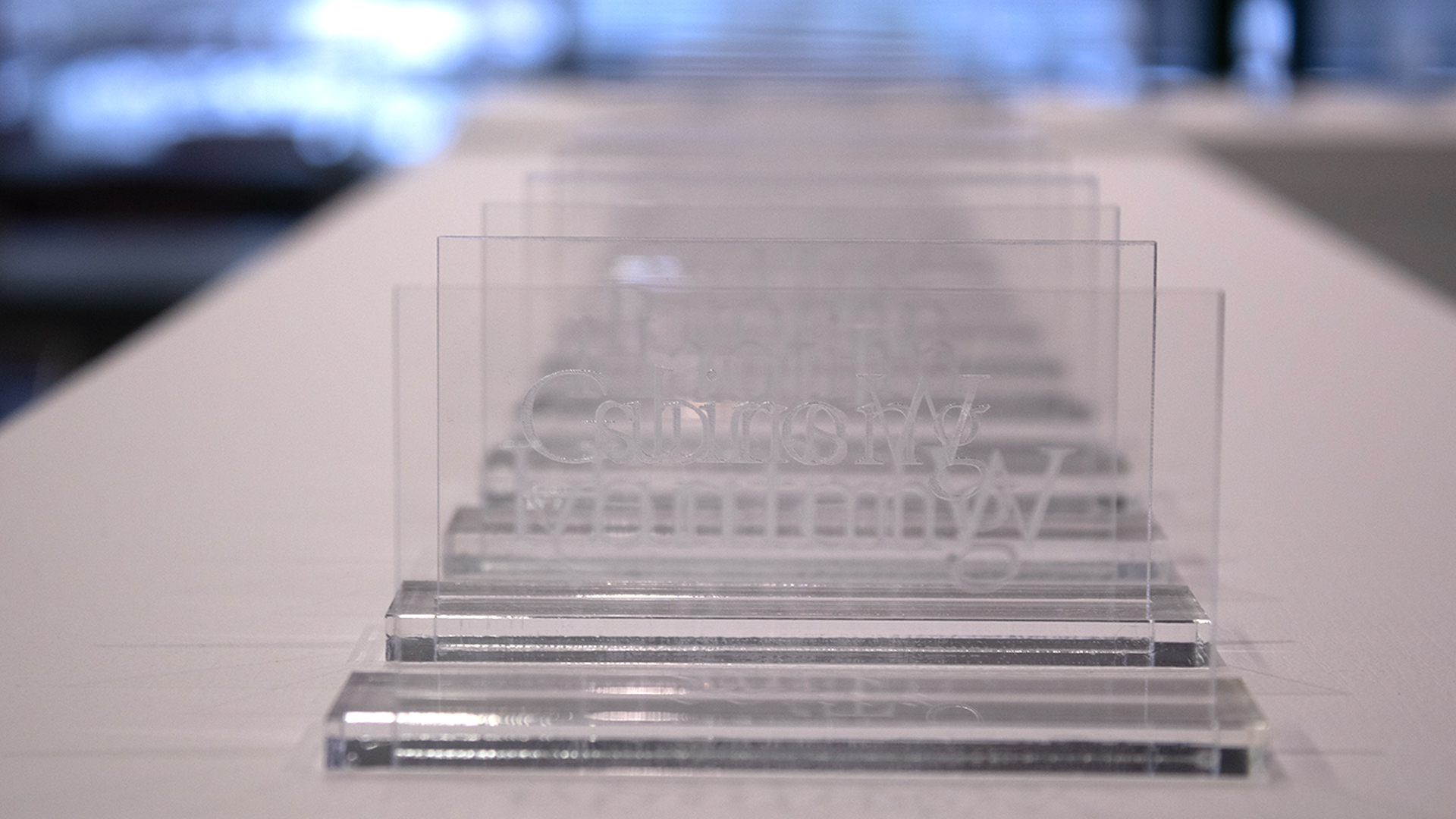
Lingering in Between presents viewers with a few common scenarios of cultural translation that diasporic communities negotiate the “in-betweenness” that lingers in their daily lives. As a term coined by Homi K. Bhabha, “in-betweenness” refers to the condition of existing between one's original culture and a new culture, a situation that people in the diaspora consistently experience. The artworks contribute to the understanding of how cultural identity is hybridized and translated in the state of “in-betweenness.”
The “Names” series is premised on the practice of the Chinese diaspora community choosing an English name as a preferred name at school and in the workplace, and the “Chat Group” series investigates a typical scenario in which two languages are used interchangeably within the daily conversations of an immigrant family. Through a minimalist approach and repetition, these artworks emphasize the affective experience of cultural negotiation and the articulation of diasporic identity; at the same time, they activate memory embodiment, allowing emotion to emerge quietly, accumulate slowly, and linger persistently in the “in-betweenness.”
Wen Li is a multidisciplinary visual artist, an MFA candidate at Western University, with a BFA from the University of Waterloo. As a first-generation Chinese Canadian, Wen had worked as an engineer for nearly two decades. Her engineering experience in China and fine art training in Canada have enabled her to explore cultural hybridity from a unique angle, blending multiple perspectives in her art practice. Her recent research focuses on cultural translation, cultural negotiation, and the materiality of language in diasporic art practice.
 Documentation by Dickson Bou, artLAB Gallery Preparator
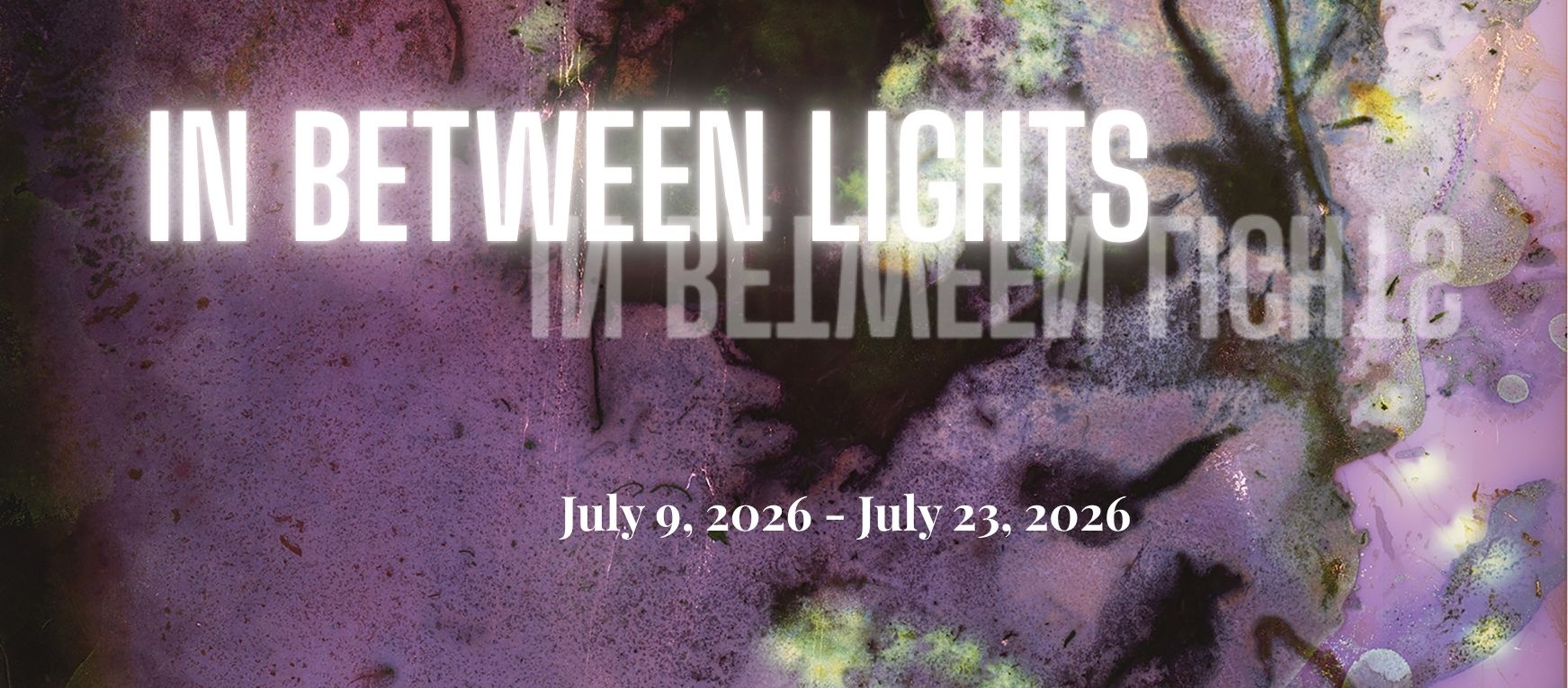
In Between Lights
Curated by Yijing Li, PhD Candidate
Works by: Julia Rose Sutherland, Michael Flomen, Ursula Handleigh
artLAB Gallery
Exhibition: July 9 - 23, 2026
Reception: Thursday, July 9 from 5-7PM
For much of photography's history, light has been understood as a tool.
A means of recording.
A means of preserving.
A means of fixing the world before it disappears.
Through light, photographs promise to archive what would otherwise be lost. They seem to transform the fleeting into the permanent, turning moments into evidence and memories into objects that can be revisited.
Yet light has always existed before photography.
Long before the invention of cameras,
before archives,
before images,
light was already moving across landscapes, touching water, stone, leaves, skin, and bodies. It arrived before us and will remain after us. Light does not belong to photography. Photography belongs to light.
This exhibition emerged from my growing desire to think with light differently.
Not as a tool to be used.
Not as a resource to be mastered.
But as a presence with its own temporality.
We cannot hold time still.
We cannot preserve it unchanged.
We can only encounter it as it passes through us.
What alternative photography offers is not the ability to capture time, but the possibility of translating it into forms we can perceive.
Tra
ces
TRANS
FORM
ATIONS
re
mem
ber
En coun ters
The works gathered in In Between Lights approach alternative photography through this understanding.
Fireflies leave fleeting traces across photosensitive surfaces.
Sunlight initiates photographic images that continue to unfold through the slow labour of weaving.
Family photographs migrate onto birch bark, layered with beadwork and deer hide, where memory is carried by materials that, like skin, bear the traces of time and lived experience.
In each case, light does not simply record a moment. It participates in an unfolding relationship between matter and duration.
 Documentation: Dickson Bou, artLAB Preparator
Lamenting Through Objects
Jennifer Joan Marion Hamilton, MFA Candidate
artLAB Gallery
Exhibition: June 11-25, 2026
Reception: Thursday, June 11 from 5-7PM
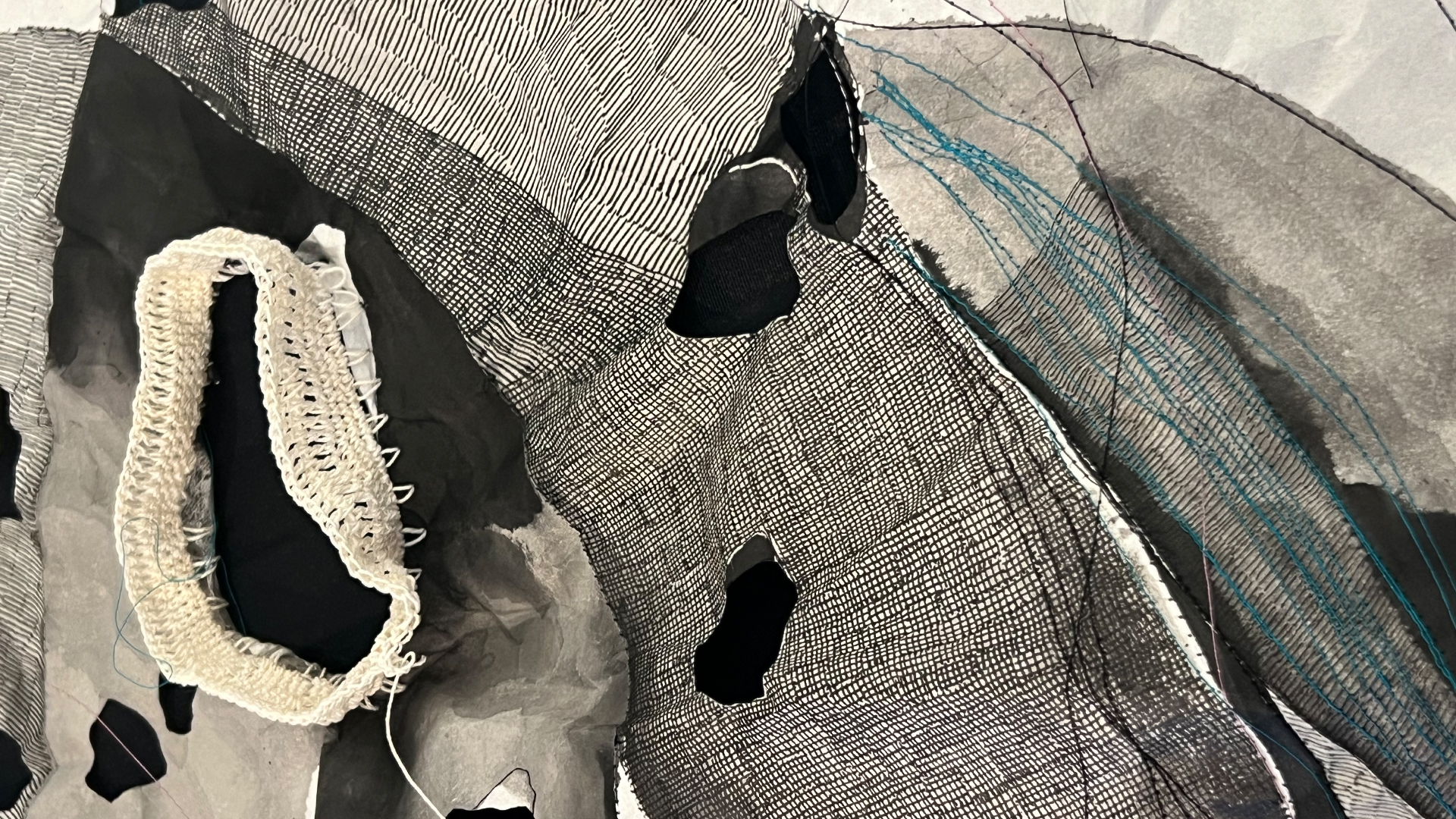
The conservation of domestic knowledge gains access to conversations that overstep time and space. Like most objects we utilize every day, we fail to notice them beyond their function until something causes a repositioning and a resonance to emerge. In the exhibition Lamenting Through Objects, I respond to the items I inherited after my mother’s death by utilizing mark-making as rumination––allowing care, repetition and embodiment to present itself as form. Once her creative collaborator, her sewing machine and I connect on paper, communicating with each other through our marks, visually referencing sorrow as labour. Together, interacting with these objects as conduits, we document the presence of her absence––archiving and honouring grief as a perceptual interference––connecting us with the deepest parts of ourselves. These drawings are communications utilizing process, time and observation to birth witness to a continual connection that lives in the liminal space of mourning.
 Documentation: Dickson Bou, artLAB Preparator
Friend of Dorothy’s
Stefania Dragalin
Exhibition: May 22 - June 25, 2026
Reception: Friday, May 22 from 5-7PM
Cohen Commons
Friend of Dorothy’s is an exhibition that explores queer identity, intimacy, and self-expression
through personal visual narratives. Borrowing its title from the historic coded phrase used within
the LGBTQ+ community, the exhibition reflects on how queerness has existed both openly and
in secret, creating spaces of connection, recognition, and belonging. Through a collection of
artworks created by myself, Stefania Dragalin, the exhibition examines sexuality not as a fixed
category, but as something fluid, emotional, and performative.
The works included in this exhibition investigate themes of desire, vulnerability, memory, and
the human body. Using imagery that ranges from intimate and tender to playful and
confrontational, the pieces challenge traditional ideas surrounding gender roles, sexuality, and
social expectations. By centering queer experiences, the exhibition aims to celebrate the
multiplicity of identities and relationships that exist outside heteronormative structures while
also acknowledging the histories of concealment and coded language that queer communities
have relied upon for survival.
As an artist, I am interested in how art can serve as both an intimate form of self-expression and
a shared reflection of collective experience. For that reason, these works are rooted in lived
experience while remaining open enough for viewers to see aspects of themselves within them.
“Friend of Dorothy’s” invites audiences into a space that is honest, vulnerable, and unapologetic,
encouraging conversations surrounding identity, connection, and the freedom to exist
authentically. Through this exhibition, I hope to create an environment that feels both celebratory
and introspective, honouring queer histories while embracing contemporary expressions of
sexuality and selfhood.

Documentation: Dickson Bou, artLAB Preparator
Sightlines
Emelie Robertson, MFA Candidate
Exhibition: May 22 - June 4, 2026
Reception: Friday, May 22 from 5-7PM
artLAB Gallery
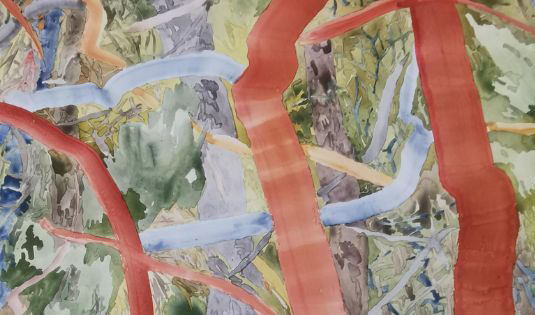
Sightlines suggests a confluence of meeting points approached through multiple entries, navigating a delicate tension between material, memory, perception, and place. Within these works, the painted surface becomes a threshold for movement and observation, where perception entangles with intuition, recollection, and material. Meaning emerges through the act of making itself: a thought or memory carried through gesture and repetition, requiring both close observation and a submission to the materials’ own agency.
This process, as a form of perceptual exchange, creates a rhythm in which time collapses, coalesces, and transforms—like walking through a forest, and like memory itself. The works remain in constant negotiation between proximity and distance, perception and expression, stillness and movement, matter and intuition, clarity, and obscurity. In doing so, they reflect an artist working through her own emotional and entangled relationship to forests, trees, water, and the unresolved histories and responsibilities carried by the land, which continue to shape how it is seen, felt, and inhabited.
 Documentation: Dickson Bou, artLAB Preparator
The Thickness of a Leaf: Meditations on Grief
Jodi Lynn Maracle, Indigenous Artist-in-Residence
Exhibition: April 23 to May 14, 2026
Reception: Thursday, April 23 from 5-7PM
artLAB Gallery
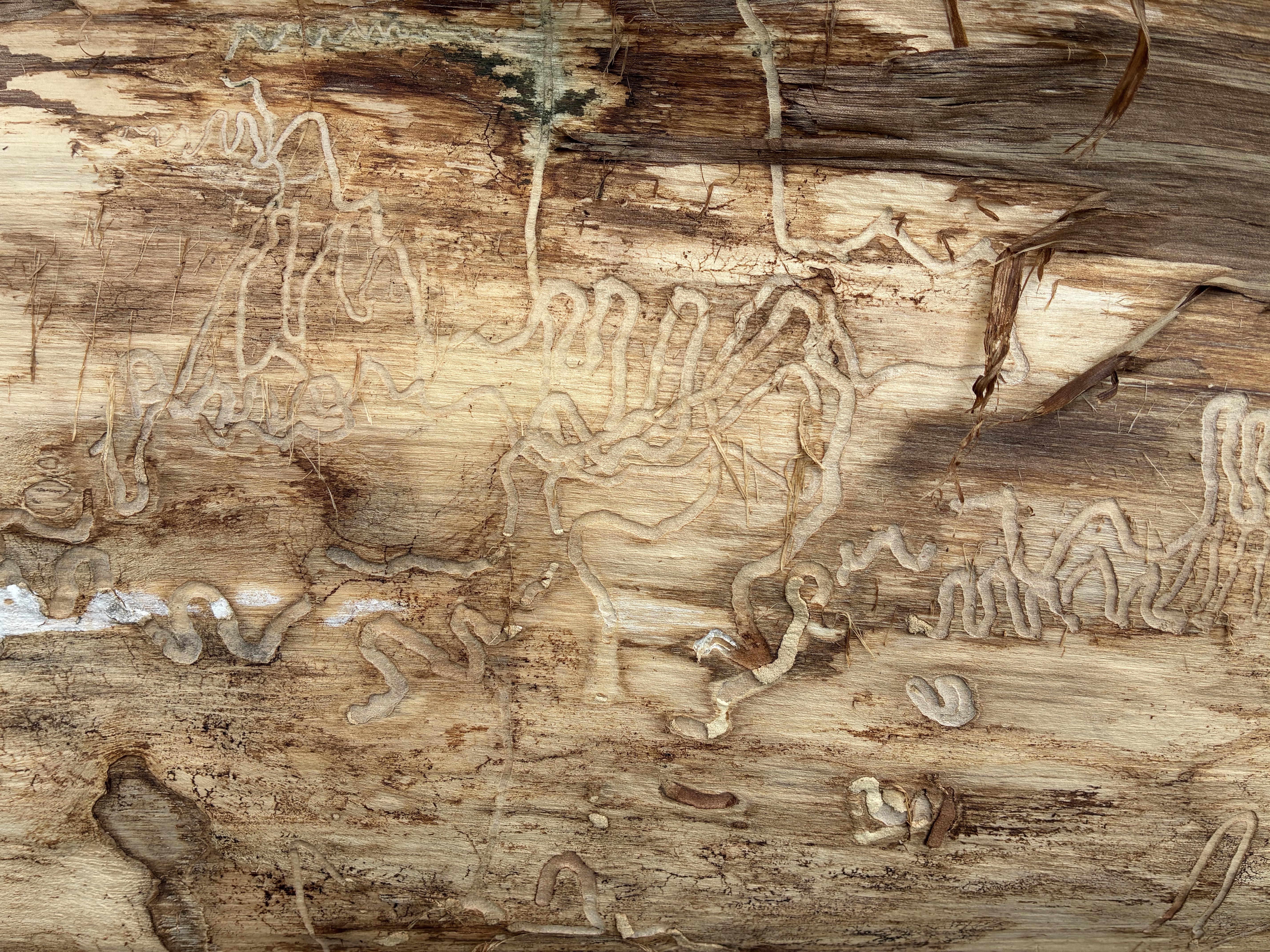
The Thickness of a Leaf is comprised of objects formed out of meditations on grief following a year of loss, chaos, and the space to breath, to experience, to mourn deeply. Grounded in personal relationships to ancestral Haudenosaunee material culture, material practices and considerations of the fallacy of healing, the objects produced as part of the residency at Western University, consider the implications of the following threads of inquiry: What is given? What remains? What is it to consider this earthly experience as a phase, a transition, like so many other points in the human experience? What becomes of us when our foundations are shaken, broken, destroyed? What is the shape of grief? Of healing? Of chosing to remain earthbound in spite of it all?
The artist invites visitors on the following dates to participate in various aspects of Haudenosaunee ancestral material cultures for what is theory without the hands to carry it out?
Wednesday April 29 from 1-3PM: Cordage
Participants are invited to listen, learn, observe and try out the practice of producing cordage from tree fibers, along with other plant fibers. Participants are also invited to contribute to communal objects on display.
Thursday April 30, 2026 from 1-3PM: Hide Tanning
Participants are invited to listen, learn, observe and try out the practice of working deer hides from their freshly skinned state to completed brain tanned, smoked, hides. Participants are invited to contribute to communal art piece for display.
Tuesday, May 5, 2026 from 1-3PM: Mending, Patching, Beading: The work of Healing
Participants are invited to listen, learn, observe and try out the practice of mending, patching and beading deerhides and textiles as a means of considering healing. Participants are invited to contribute to communal art piece for display.

Documentation: Dickson Bou, artLAB Preparator
EXOPHONY
Exhibition: April 23 to May 14, 2026
Reception: Thursday, April 23 from 5-7PM
Cohen Commons
Curated by Aaron Ambroso and Rojina Sabetiashraf
Work by: Maria Awaraji, Maia Cochrane, Behnaz Fatemi, Jessica Joyce, Masha Kouznetsova, Wen Li, Sasha Parmasad, Xi Jin
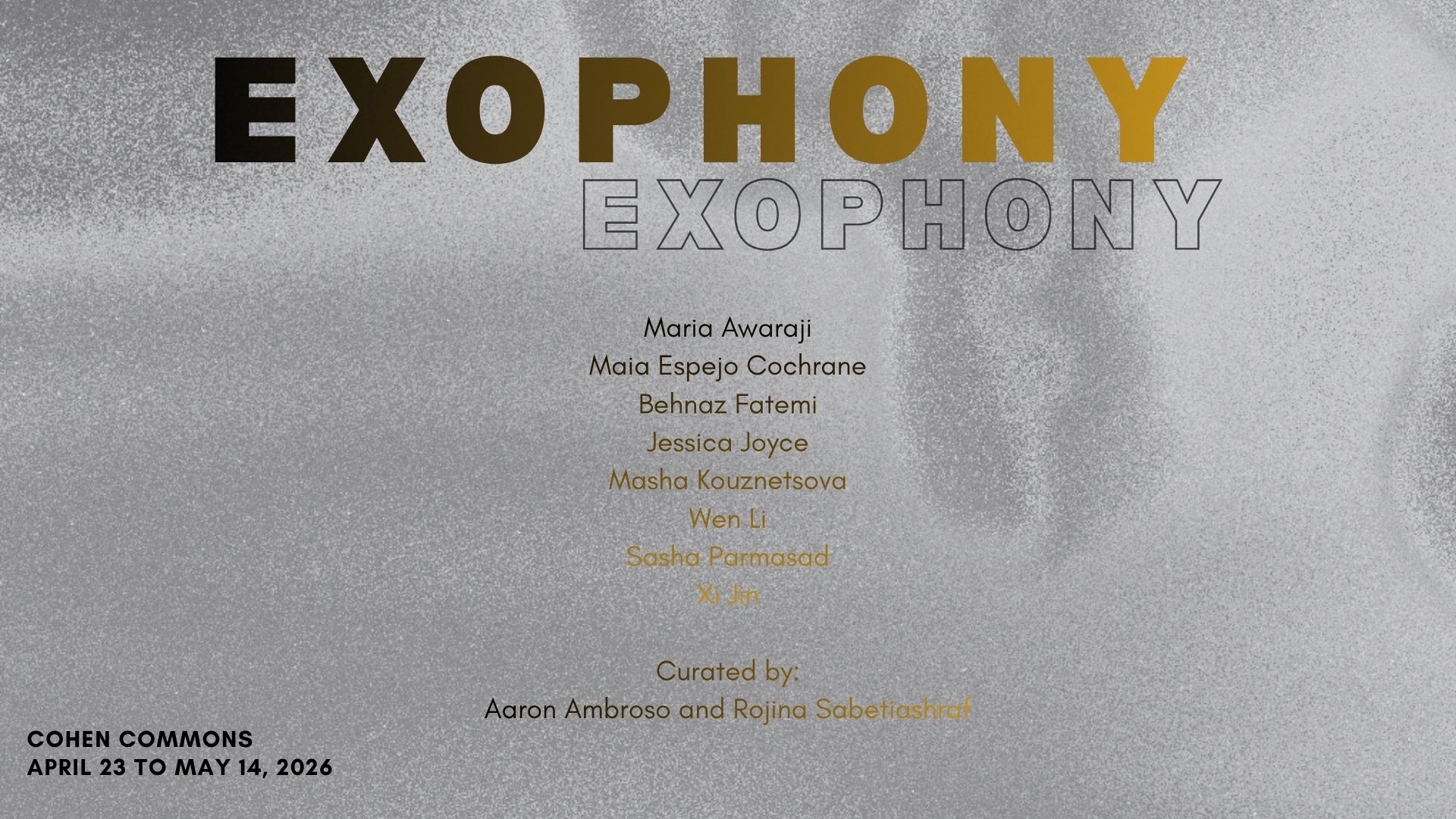
Exophony brings together artists whose practices engage migration, diaspora, and cultural displacement. Working across painting, video, performance, and installation, the exhibition approaches culture not as fixed, but as something shaped through tension between origin and arrival, memory and present, belonging and estrangement. This tension is the condition of making. It emerges where translation breaks down, where meaning resists equivalence, and where cultural forms change as they move across borders. It is carried in objects and gestures that arrive altered, and in bodies moving through spaces not made for them, where the distance between perception and self-understanding lingers. Borrowed from linguistics, exophony refers to expression outside one’s mother tongue. Here, it extends beyond language to include visual and embodied forms of articulation. To work exophonically is to produce from inside displacement. The artists in this exhibition work in that space of dislocation. Their works trace how meaning is (re)configured through movement, misalignment, and encounter, where continuity is interrupted, and new forms take shape.
What does it mean to speak and to make from elsewhere?
View artist label information and statements here.
 Documentation: Dickson Bou, artLAB Preparator
WINTER 2026
solace
Exhibition: March 20 to April 09, 2026
Reception: Friday, March 20 from 6-8PM
Studio Art Practicum Exhibition
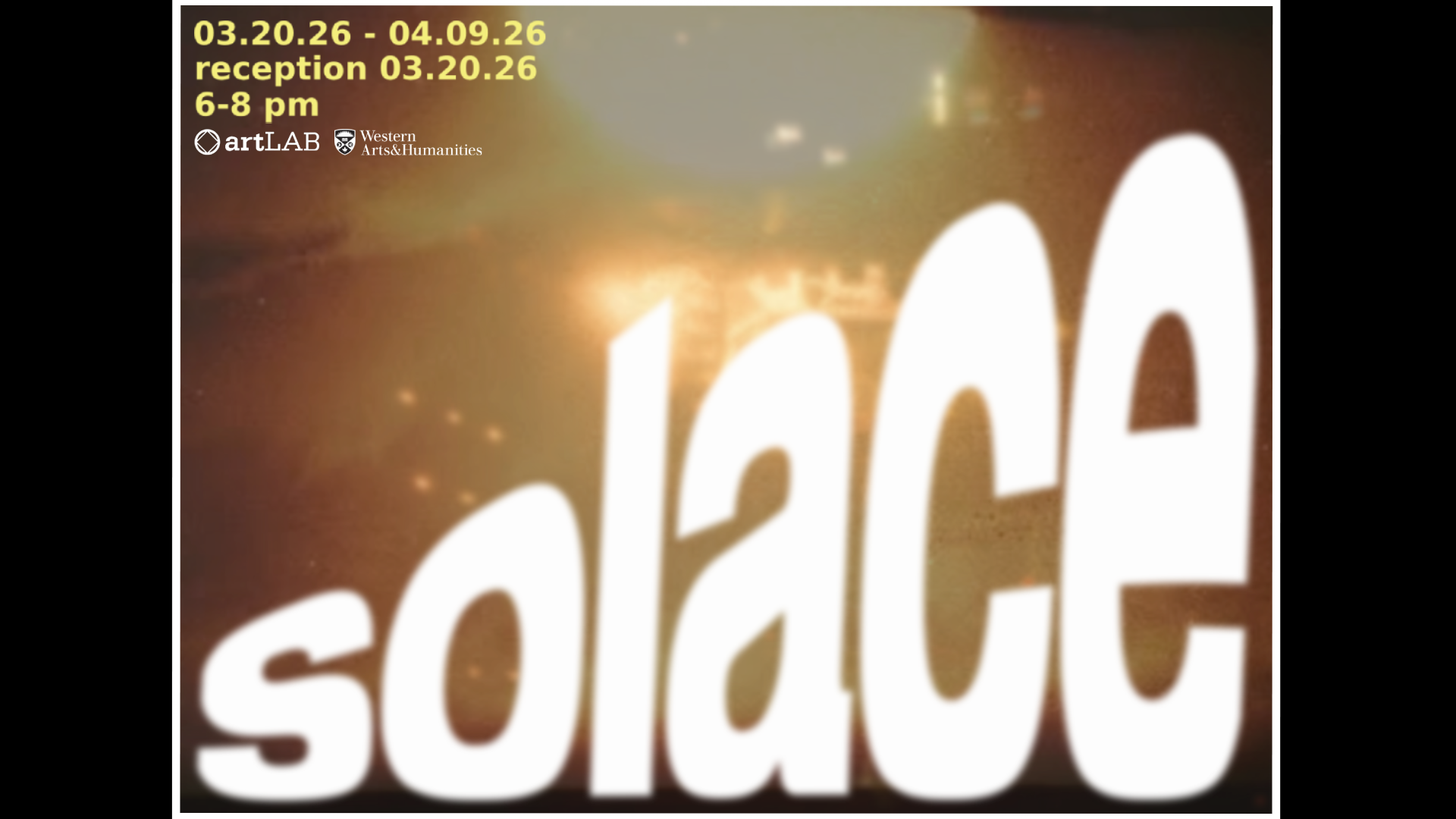
The 2026 Studio Arts Practicum class is happy to announce solace, hosted by the artLAB Gallery. This will be the capstone exhibition for our class and is a way to express what we have worked on over the academic year.
We look forward to seeing you at the opening reception, Friday March 20th from 6-8PM. The exhibition will be running from March 20th – April 9th.
Featuring works from Afsha Majid, Dahlia Sullivan, Daniel Penano, e okutan, Emily Kings, Emma Hardy, Eniola Olutunfese, Faust Tomaszewski, Jade Kelly Doneff, Jean Mcpherson, Joshua Mckee, Katelyn Halter, Lexi Wilson, Meghan Dennison, Paniz Nabi, Sawyer Shin, Siena Toth, Stefania Dragalin, Sydney Norton, and Thalía Ma Lei.
Solace is consolation, the warmth of the sun, a pocket of comfort in times of stress and uncertainty. We have worked hard this year to express ourselves as we prepare for the next chapter in our lives. Finding joy in the mundane, letting our mediums guide us, and exploring our unique, individual cultures has been a way for each artist to find solace in their work.
Special thanks to our professor Soheila K. Esfahani and our teaching assistant Brittany Forrest for their continued guidance throughout the semester.
 Documentation: Dickson Bou, artLAB Preparator
The Past is our Present Exhibition
Exhibition: March 20 to April 09, 2026
Reception: Friday, March 20 from 6-8PM
Curated by Nicole Iun
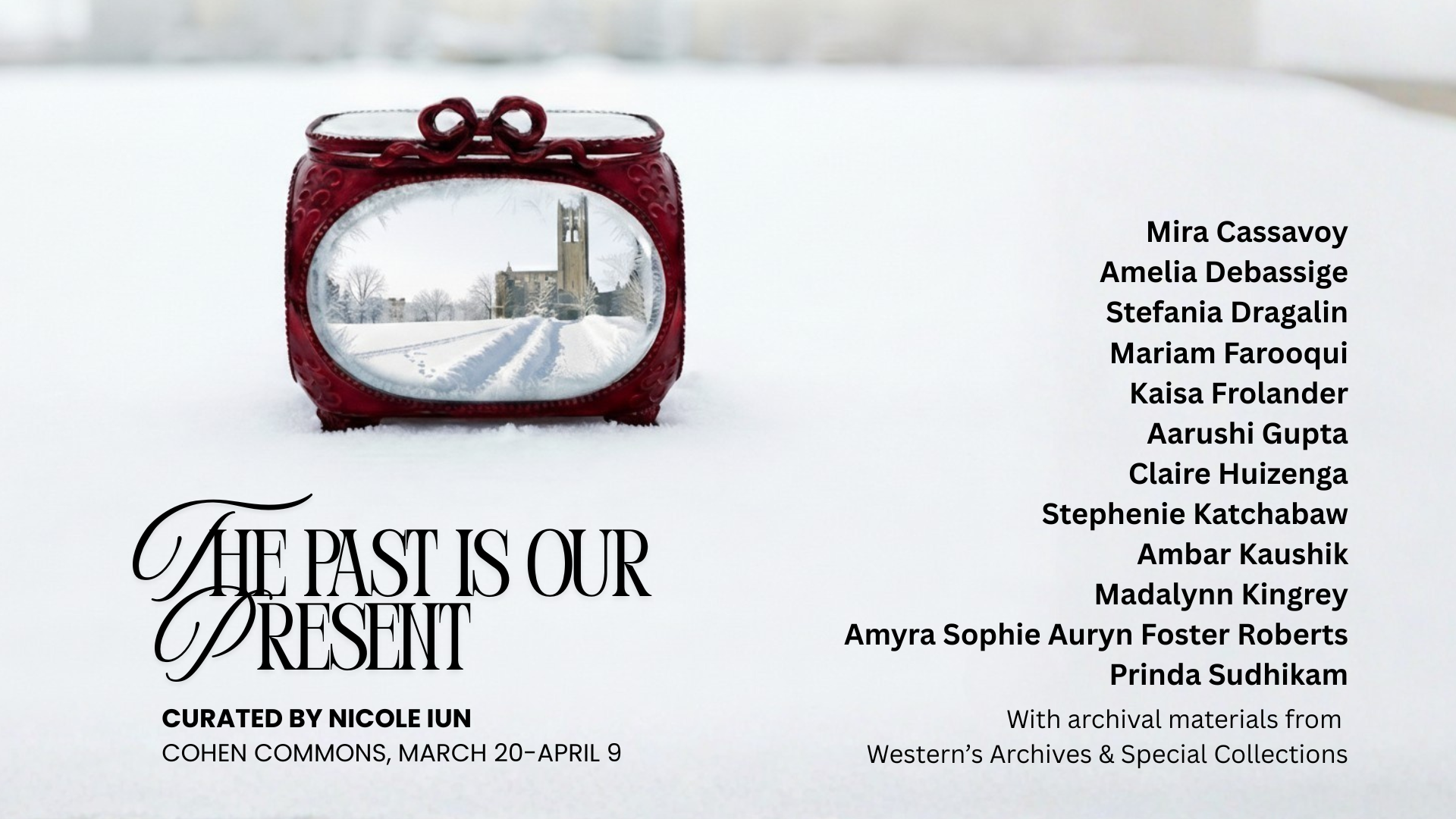
This exhibition features works by: Mira Cassavoy, Amelia Debassige, Stefania Dragalin, Mariam Farooqui, Kaisa Frolander, Aarushi Gupta, Claire Huizenga, Stephenie Katchabaw, Ambar Kaushik, Madalynn Kingrey, Amyra Sophie Auryn Foster Roberts, Prinda Sudhikam, and archival materials from Western Archives and Special Collections.
Have you ever started missing a moment while you’re still living within it? As we move towards the close of the academic year, The Past is our Present encourages us to live in and celebrate the “present” gifts that were brought by the past that came before us. Through intersections between the past and the present, student life is presented as a pivotal period of growth that passes by quicker than we think. Beginning with solitude and moments of struggle, we eventually become witnesses to our own transformation shaped by the people, spaces, and emotions we encounter.
With support from the Museum of Curatorial Studies. Archival images courtesy of the Archives & Special Collections at Western University. Images of student life at Western since 1939 will be featured alongside artworks from current students, showcasing our continuing stories of creativity, community, and spirit.

Documentation: Dickson Bou, artLAB Preparator
Shibori Dyeing Workshop
Organized by Rina Liu artLAB Intern
Monday, March 30 from 1-3PM
Printmaking Studio VAC149, JLVAC
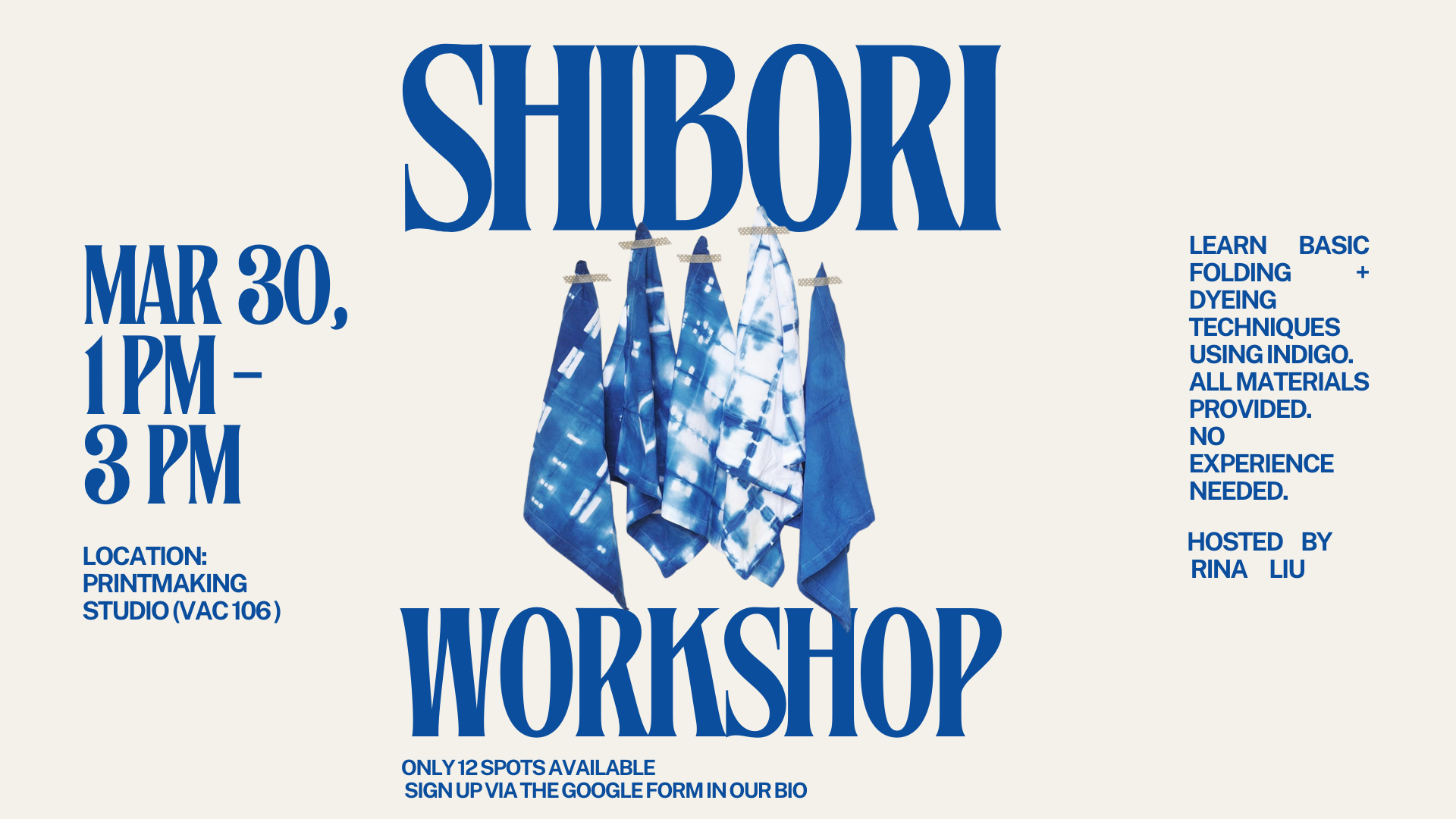
Ready to try your hand at indigo dyeing? Join us for a Shibori workshop where we’ll explore the basics of Japanese resist-dyeing through simple folding and binding techniques. You’ll create your own one-of-a-kind patterned textile using an indigo vat, with materials provided for all participants.
We’ll begin with a quick demo of a few classic Shibori folds, then you’ll have time to experiment, dye, and reveal your design. No experience needed, just wear clothes you don’t mind getting a little blue.
Workshop limited to 12 participants.
Sign up using the Google Form linked in our bio.
With support from Museum and Curatorial Studies.
We hope to see you there!
Mini Clay Sculpture Workshop
Organized by Katelyn Halter, artLAB Intern
Friday, March 27 from 12:30-2:30PM
Cohen Commons, JLVAC
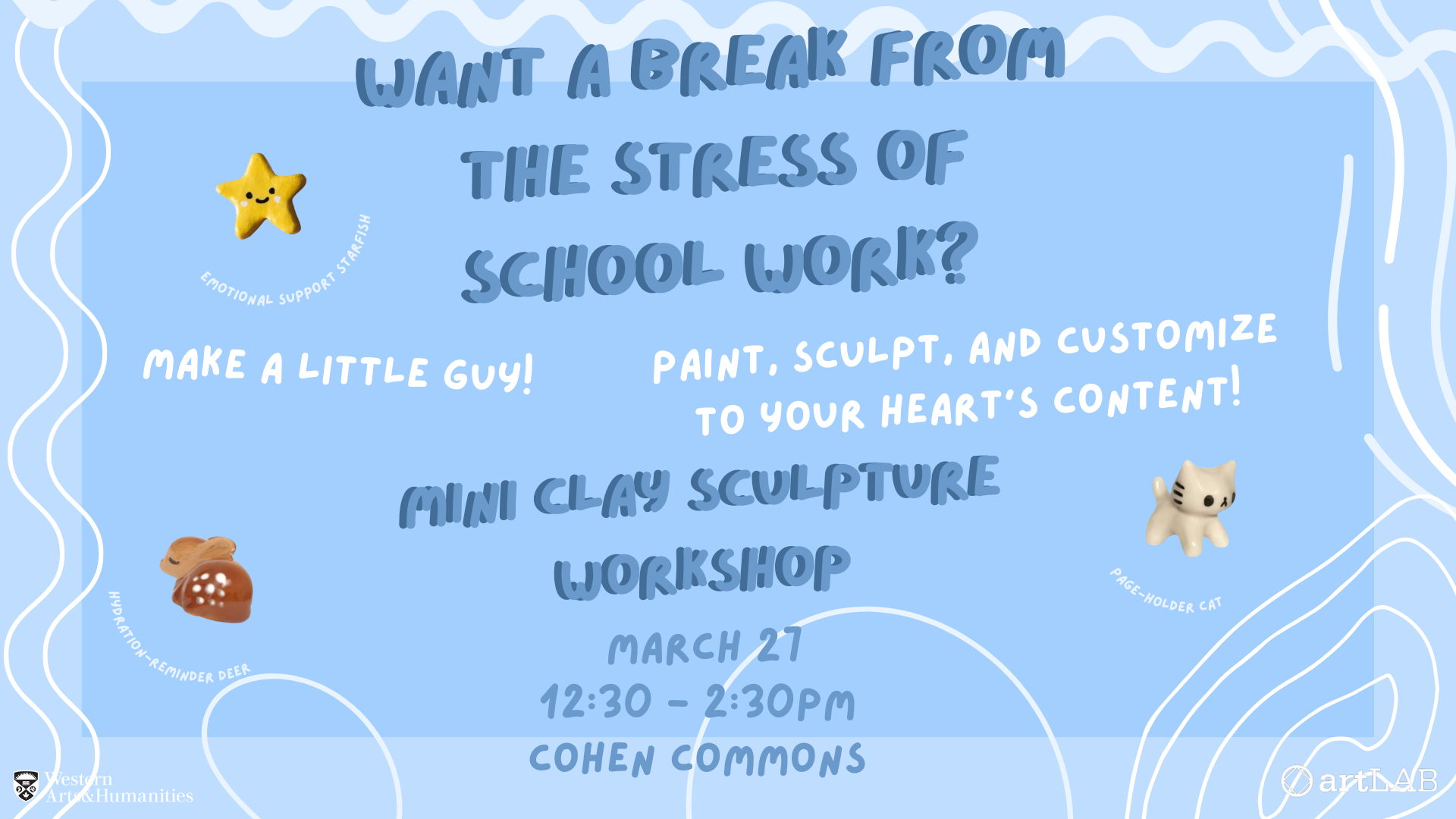
Stressed with homework, midterms, or the looming impending doom of final exams? Come on in for a casual, drop-in, clay sculpture workshop! You’ll be provided with air-dry clay, tin foil, and paint to create and customize your own little clay sculpture.
Each participant will be limited to only one serving of clay and tin foil to ensure that supplies are evenly distributed. Example mini sculptures will also be provided if you need inspiration! Drop-in, while supplies last.
Diaspora Climate
Exhibition: February 12 to March 5, 2026
Reception: Thursday, February 12 from 5-7PM
Curated by Yan Zhou, 2025–26 Curator-in-Residence
Sara Angelucci
Teresa Chan
Ma Yongfeng
Rehab Nazzal
Public Programs and Events:
- Ink Marbling Workshop
Led by Teresa Chan
VA 206 / JLVAC, February 12, 12-2PM -
Murmuration
Live Sound Performance
Teresa Chan and Jan Lai
February 12, 5:45–6:15 PM
artLAB Gallery - Screening and Discussion: Rehab Nazal's documentary film Vibrations from Gaza
Participants: Rehab Nazal, Kirsty Robertson, Sheri Nault, Ma Yongfeng and Yan Zhou
February 23 from 1:15-3PM
In-person: VAC 249
Online: Zoom
Press
Meet Western’s inaugural curator-in-residence, Yan Zhou
Written by Cynthia Fazio
Western News
Western’s first curator-in-residence brings activism into the gallery
Written by Gabrielle Wade
Western Gazette
Curatorial Statement
Diaspora Climate brings together diverse climates, cultures, languages, histories, memories, feelings, perspectives, and connections through personal experiences and artistic expressions, linking an affinity with both natural environments and cultural dispositions. Human beings are as sensitive to displacement and transplantation as plants and animals. Diaspora Climate signals the ethical and emotional bonds diasporic people hold with the climatic pressures affecting them both “here” and “there”, including struggles, suffering, and the shared fate of the world and planet Earth.
The exhibition features work by four artists: Sara Angelucci (Toronto), Teresa Chan (Toronto), Ma Yongfeng (Berlin), and Rehab Nazzal (occupied West Bank, Palestine). Their works respond to relationships with particular places, cultures, histories, climates, and environments, while also addressing ongoing afflictions of social and environmental violence, driven by brutal global capitalism, colonialism, and arbitrary state apparatuses. These forces bring wars, relentless exploitation, and the dispossession of living space and life for both nature and people, intensifying the Climate Crisis. The voices and gestures that artists share through their works are ripples of Global Diaspora Solidarity.
The Japanese word fūdo (Chinese and Japanese Kanji: 風土) is translated as “climate,” yet its meaning extends beyond meteorological conditions. It signifies the inseparable and mutually formative relationship among seasons, climate, nature, and modes of human life and sensibility in a particular place, culture, and its history. A related Chinese saying, 一方水土養一方人, expresses a similar idea: that the soil and waters of a given land nurture the distinctive dispositions of its people. In this sense, fūdo (風土氣候) is comparable to the ancient Greek concept of chōrographia, which refers to the description or mapping of a specific region or country, emphasizing local features, history, natural history, and culture, in contrast to geography, which sought to describe the world as a whole. Chōrographia suggests that the topography, natural environment, and social and political structures of a particular area are interconnected.[1] fūdo (風土氣候) is still embodied in East Asian perceptions of the world and in their aesthetic–climatic sensibilities, whereas in the modern Western world, a scientific divide tends to separate and dominate human relationships with nature.
When the modern Japanese philosopher Tetsurō Watsuji (1889–1960) brought the traditional East Asian concept of fūdo (風土) into dialogue with Western scientific notions of “climate” and “environment,” he understood climate not merely as a natural phenomenon. Rather, he argued that human existence, history, and climate are inseparable. In a climatic register, humans apprehend themselves and shape both individual and collective sensibilities. Therefore, social, cultural, and political transformation depends upon the transformation of climatic culture; as it changes, the customs and habits of a people change accordingly (移風易俗). Furthermore, Watsuji suggests that diaspora, those who have left and become distanced from their homeland, and the “other,” who does not fully belong to a given climatic culture, may grasp a climate and fūdo (風土) in a uniquely profound and nuanced way, one that is often more reflective and thought-provoking.[2]
Diaspora holds an acute and incisive political position from which to question and reinterpret the relationship between climate and culture. It activates each individual as a micro-center, responsible for addressing issues of climate change and for pursuing climate and social justice.
Diaspora refuses to be fixed to a single position. Carried on in migration and drifting, diaspora lives simultaneously inside and outside of “home” and “homelessness,” being here (displaced and adopted) and there (exiled and distanced). As writer Yōko Tawada, who writes in both Japanese and German, argues, diaspora refuses to be integrated into a dominant language and culture and denied parts of themselves, such as accent and one’s history and cultural memory. Meanwhile, diaspora also flies from the cocoon of the mother tongue and journeys into adventurous encounters with other tongues, creating new communities rather than being bound to predetermined communities or fixed identities (2025).[3]
We cannot talk about climate change or social and environmental justice without confronting the ongoing genocide and ecocide in Palestine, the environmental disaster following the Russian invasion of Ukraine, and the erasure of Indigenous communities and forests in the Amazon and elsewhere—all exemplify the devastating consequences of global environmental and social injustices.[4] In particular, I believe, we cannot talk about anything, any change, and any future, if we avoid looking at and talking about Palestine: what has been happening to its people and land under an increasingly brutal Apartheid system of genocide, ecocide, siege and elimination of eco-human life and culture, imposed by a fully techno-weaponized modern state.
Once a terrible world is born through the deprivation, exploitation, and killing of one group of people by another—as in Nazism, colonialism, Apartheid, or dictatorship—its psyche, ideology, and whole mechanism continue to evolve and contaminate the world. It therefore becomes the obligation of everyone, and particularly of critical and creative minds, to resist it and to fight for justice and the rights of every being, human and non-human, with unwavering attention and sustained effort.
We should rethink our dear and precious life and world from the position of “bare life,” which designates the victims of the violence of sovereign power who are deprived of their rights to live as full human beings in every sense.[5] The deprived, abused, and threatened cherish the precious life more deeply; they preserve and shine the light of dignity of life more radiantly; and they hold tight to the faith in justice more adamantly. They are more human, and more humanly, than the abusers and those who support, tolerate, or comply with them. They fight for life with all their means; they fight for life with life itself. They fight for humanity. The “qualified life,” secured by killing others and by imposing segregation and deprivation, is not true life. Instead, it is soulless slavery that abandons humanity and being human together with other human and nonhuman beings.
Yan Zhou
January 2026
Notes
[1] The ancient Greek term chōrographia (or chorography) derives from khōros, meaning place or region, and graphia, meaning writing or drawing. The term appears in the work Geography by the ancient Greek geographer Strabo and later reemerged during the Renaissance, notably in Athanasius Kircher’s Mundus subterraneus. Interest in this form of study continued into the late eighteenth century, before the emergence of modern scientific disciplines. Strabo. Geography. Loeb Classical Library. Accessed via Internet Archive.
https://archive.org/details/Strabo08Geography17AndIndex Kircher, Athanasius. 1662. Mundus subterraneus. Amstelodami: Apud Joannem Janssonium à Waesberge & filios.
Buonanno, Rossella. 2014. The Stars of Galileo Galilei and the Universal Knowledge of Athanasius Kircher. Cham: Springer International Publishing.
[2] Watsuji, Tetsurō. 1961. A Climate: A Philosophical Study. Translated by Geoffrey Bownas. Tokyo: Printing Bureau, Japanese Government. Accessed via Internet Archive. https://archive.org/details/climatephilosoph0000wats_g9l6
Watsuji, Tetsurō. 2022. Intro / Climate & Culture. Introduced by Nathan Hohipuha. YouTube video, December 17, 2022. https://www.youtube.com/watch?v=AIxBjWtu-fU&t=13s
[3] Tawada, Yōko. 2025. Exophony: Voyages Outside the Mother Tongue. Translated by Lisa Hofmann-Kuroda. New York: New Directions Publishing Corporation.
[4] Dinc, Pinar, and Necmettin Türk. 2025. “Roots of Destruction: Exploring the Genocide-Ecocide Nexus through the Destruction of Olive Trees in Occupied Palestine and Rojava.” The International Journal of Human Rights, August, 1–25. https://doi.org/10.1080/13642987.2025.2541756. IMEU (Institute for Middle East Understanding). 2022. “Fact Sheet: Israel’s Environmental Apartheid in Palestine.” November 3, 2022. https://imeu.org/resources/resources/fact-sheet-israels-environmental-apartheid-in-palestine/126.
Joseph, Lesley. 2025. “This Is What Ecocide Looks Like: Reflections on Israel’s War on the Environment in Gaza.” Journal of Palestine Studies 54 (2): 82–87. https://doi.org/10.1080/0377919X.2025.2520728
Forensic Architecture. n.d. “Environmental Violence.” Accessed January 10, 2026. https://forensic-architecture.org/category/environmental-violence
[5] Agamben, Giorgio. 1998. Homo Sacer: Sovereign Power and Bare Life. Stanford, Calif: Stanford University Press.
 Documentation by Dickson Bou, artLAB Gallery Preparator
Introduction of artists and exhibiting works
As a second-generation Italian immigrant, Tkaronto/Toronto-based artist Sara Angelucci (she/her) has created photography, video, and audio projects that explore repressed narratives and meaning embedded in the conventions of photography. Often using archival images as source and inspiration, her projects have revealed broader cultural and historical contexts that photographs hold, teasing out new ways of looking. In addition to working with archival images, Angelucci has been inspired by the themes they reveal. While evolving over time, Angelucci’s work remains coherent in its sustained attention to immigrant memories; the migration of species; mutually reliant relationships with the natural world; and the healing forces of nature.
For this exhibition, Angelucci created two new works, Neither Here nor There and Family Harvest. Neither Here nor There features a pomegranate scanned in the artist’s ancestral village of Montottone (Le Marche, Italy), paired with a wild apple tree infested with LDD moth caterpillars, scanned in the Pretty River Valley in Ontario. As neither fruit is native to those regions, the work gestures toward traces of “human and plant diasporas” (in her own words) across continents and time, and their displacements between here and there—Italy and Turtle Island (the land currently called Canada), past and present.
In Family Harvest, Angelucci embeds a photograph of her grandparents, uncles, and aunt harvesting wheat within a scan of wheat and grape leaves, their dietary staples. Angelucci’s family were sharecroppers, literally earning their daily bread from what they could grow on land owned by a seigneur. Together, these images point to a long and complex relationship between plants and humans, governed by the need to move to other lands (for many reasons), and to the looming impact that climate change will have on the botanical world and humans.
READ:
A botanical diaspora
By Sara Angelucci
MORE:
https://www.sara-angelucci.ca/
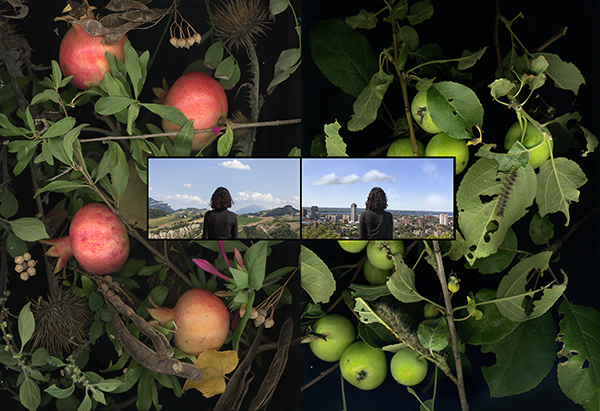
Sara Angelucci. Neither Here nor There. Photography on mural paper. 2025.
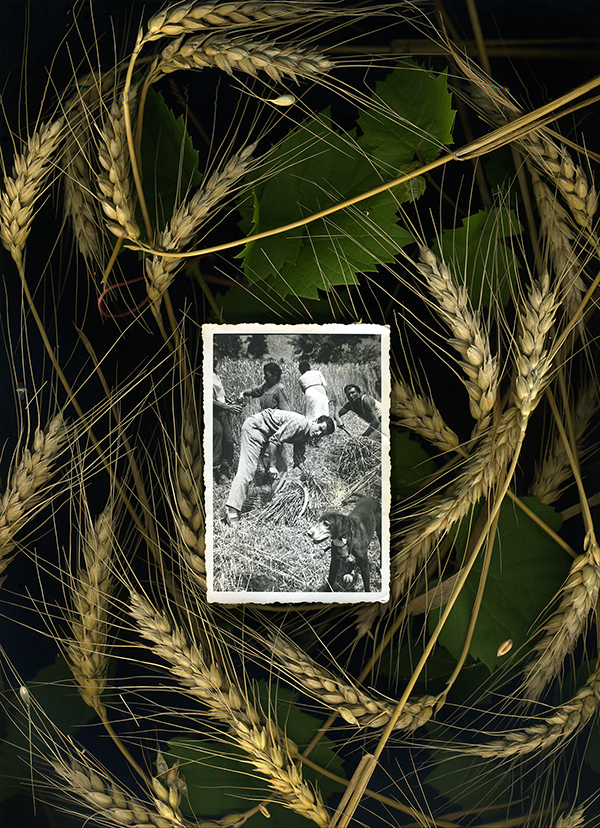
Sara Angelucci. Family Harvest. Photography on mural paper. 2025.
Teresa Chan (she/her) is a multidisciplinary artist and award-winning children’s book author with an educational background in ecology and anthropology. As a Hong Kong diaspora, Chan has lived and worked in Tkaronto/Toronto since 2022. Deeply influenced by Japanese Buddhist traditions, Chinese Taoist thought, Indigenous cultures in Taiwan, and the multicultural milieu of Hong Kong, her practice is imbued with East Asian intuitions of the interconnectedness of all beings and life cycles in the universe, cross-cultural sensibilities, and multispecies perspectives. In her art practice, Chan gently engages with life and nature, memories and cultures, through intimate attunement to local landscapes, soundscapes, and weatherscapes. Her “ephemeral” works function as both therapeutic practice and art activism, linking spiritual cultivation, cultural identity, and ecopolitical positioning.
In A Murmuration of Diaspora (呢喃:驪歌), Chan created a body of work that metaphorizes and trans-metaphorizes the flight of common starlings (Sturnus vulgaris), to reflect on migration, habitat, displacement, and adaption of humans and non-human worlds. The project comprises the photography series Murmurer; ink drawing and trace-making works The Murmurs and The Ripples; installation pieces Murmurer and Origami Birds; as well as the interactive installation Make a Wish. In addition, the artist will hold an ink-marbling workshop based on the Japanese Buddhist monks’ tradition of suminagashi (meaning “ink floating”), inviting participants to meditate through embodied interaction with nature and time.
READ:
A Murmuration of Diaspora
By Teresa Chan
Murmuration - Live Sound Performance
By Teresa Chan and Jan Lai
MORE:
www.7eresa.com
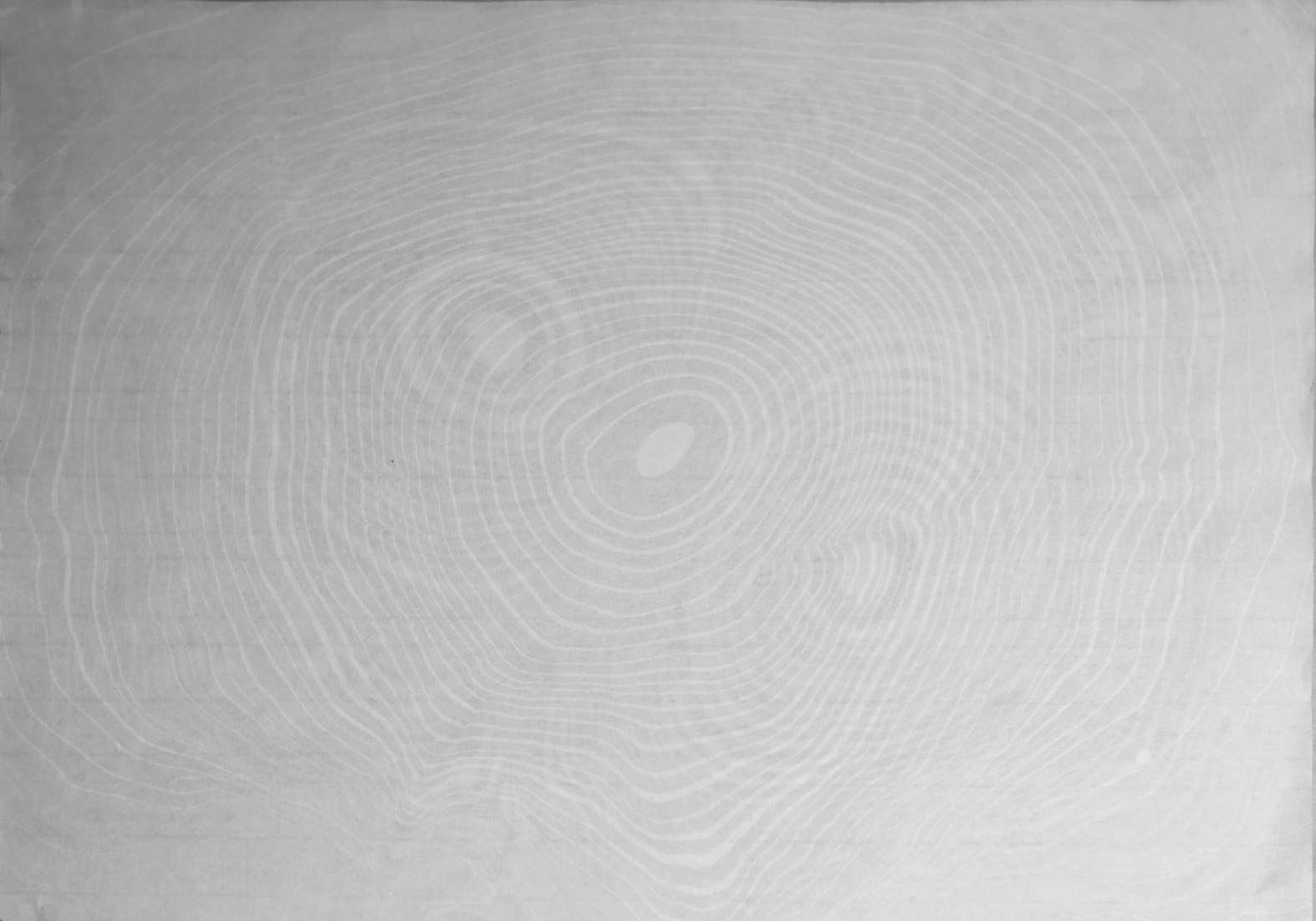
Teresa Chan. The Ripples. Ink on paper, 10'' x 14''. 2025.
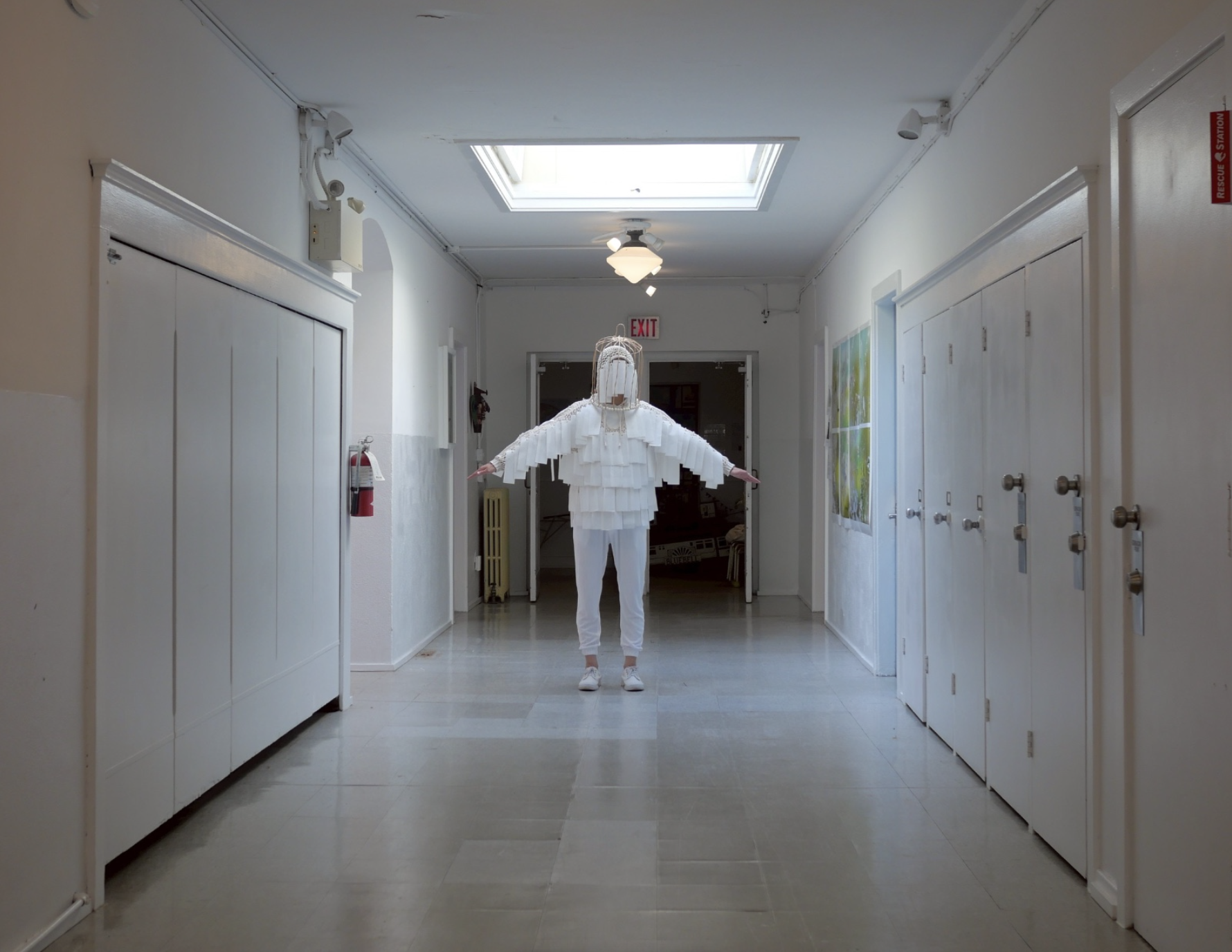
Teresa Chan. Murmurer #1. Photo on paper, 8'' x 12''. 2025.
Ma Yongfeng is a Chinese diaspora artist, filmmaker, and curator based in Berlin, whose recent work focus on politically engaged art practice inspired by non-human-centered perspectives and anarchical resistance. In his essay film Poetics of Mycelium (2025), Ma explores mycelial eco-political planetary imaginaries, weaving poetic elegies of exile to bring light into sprouting, resilient, and decentralized life cycles and futures.
READ:
Mycelium
By Ma Yongfeng
Poetics of Mycelium
By Ma Yongfeng
MORE:
https://www.mayongfeng.com/
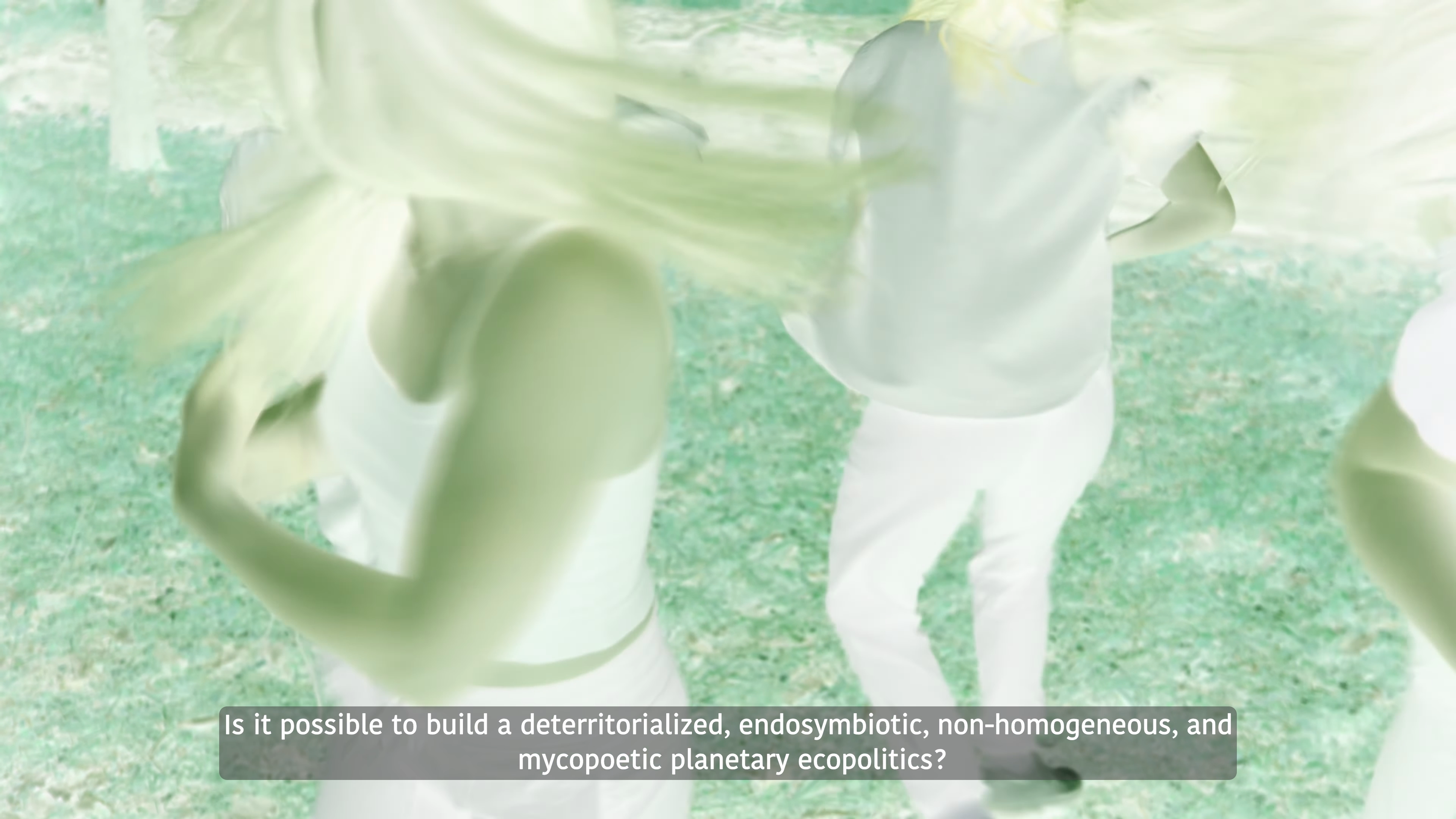
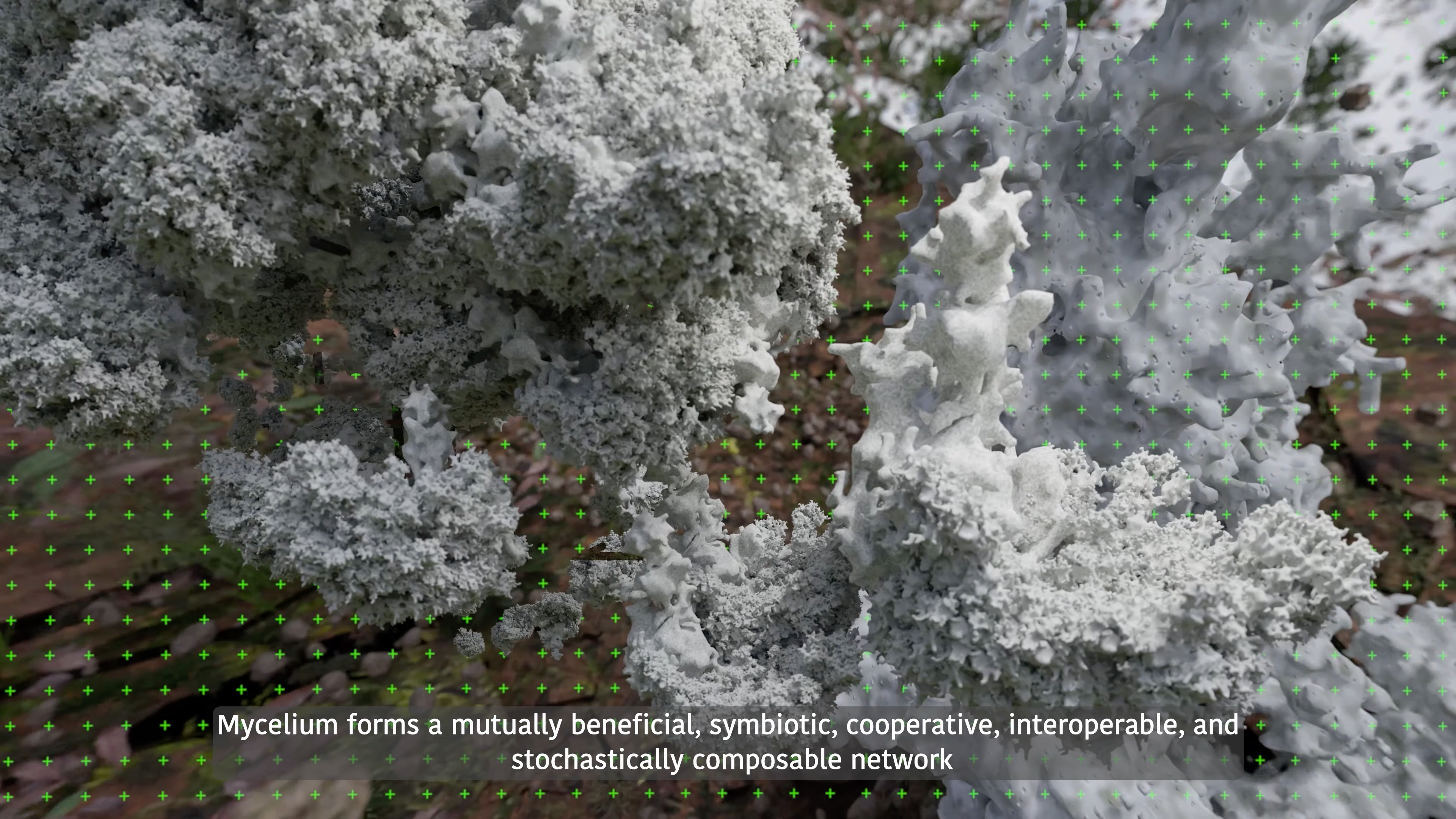
Ma Yongfeng. Poetics of Mycelium. Essay film, 4K, 16:9, 42:05 mins. Still images. 2025.
Rehab Nazzal is a Palestinian Canadian multidisciplinary artist, activist, and art educator currently based in the occupied West Bank, Palestine. She was born and grew up in Jenin, northern Palestine, where her family have lived on their land with orange orchards and olive groves, long before the establishment of the state of Israel.
Nazzal left her home in 1985 to pursue her studies at Damascus University in Syria and later migrated to Turtle Island (Canada). She was exiled and denied the right to return to her homeland for more than twenty years by Israeli authorities, until 2005. In Canada, she earned a PhD from Western University, an MFA from Ryerson University, and a BFA from the University of Ottawa. She has taught at Simon Fraser University in Vancouver, Western University in London, Ontario, and the Ottawa School of Art. Since 2018, Nazzal has taught at Dar al-Kalima University College of Arts and Culture in Bethlehem, Palestine.
Living under Israeli settler colonialism and through what she described as “incremental genocide” (2018) in her homeland,1 Nazzal uses her camera as a witness and artistic weapon of resistance, to document and reveal the daily suffering and struggles of people, land, and non-human life in occupied, colonized, and segregated territories. Her extensive body of multimedia work, including video, film, photography, sound, and installation, is grounded in intensive field research and produced on-the-ground investigations, sometimes under life-threatening circumstances.2 These works expose the unimaginable brutality of apartheid settler colonialism and genocide, the hardships of Palestinian daily life, and the enduring resilience, ṣumūd (steadfastness), and resistance of the Palestinian people.
The exhibited work, Looking Back, Looking Ahead, driving from Ramallah to Bethlehem, Driving from Ramallah to Jenin (video, 2013) is part of Nazzal’s decade-long multimedia project Driving in Palestine. Created by the artist mainly from moving vehicles, the project captures views of the apartheid wall, military checkpoints, gates, fences, watchtowers, roadblocks, and systems of surveillance that have jeopardized Palestinian daily life for more than seventy years. The work reveals regimes of segregation, confinement, surveillance, as well as restrictions on freedom of movement that have transformed the occupied West Bank into an open-air prison. The work exposes the ongoing dispossession of the Palestinians and the shrinking of their spaces, alongside an altered landscape and wounded nature imposed by the Israeli state. Its mechanisms have also been adopted from previous apartheid and settler colonial regimes and replicated by other authoritarian powers.
In the documentary Canada Park (2015), Nazzal discloses the complicity of Canada in the settler colonial project in Palestine, focusing on three villages: Imwas: Yalu, and Beit Nuba, occupied in 1967 in the West Bank, their 10,000 residents were forcibly displaced, and their homes were leveled to the ground. In the late 1970s Canada funded the establishment of an exclusively Israeli recreational park over the ruins of the villages, called “Canada Park,” in violation of international law.
For the Palestinian indigenous people, plants and trees are not only life-sustaining and nature-preserving; the earth and its beings also bear wounds and trauma shared with human life. Yet nature and the land always renew and heal. Shot during the COVID-19 Pandemic, Healing Moments (video, 2023) captures flowering, breathing, and rejuvenated nature, with the sounds of wind and water, the chirping of insects, the songs of birds, and the rustling of leaves on the bruised Palestinian land and its organic environment. These images and sounds of plants, people, and the earth resist violence and elimination, preserving an indestructible strength for life, growth, healing, hope, and revival.
In Nazzal’s award-winning documentary film Vibrations from Gaza (2023), Deaf children in Gaza, Palestine, share their experiences of Israel’s siege and frequent bombardment that shake the air and the ground and destroy buildings, as well as the constant threat of drones, through their bodies, facial expressions, and sign languages. The contrast between the liveliness and loveliness of the Deaf children and the atrocities of their living world under Israel’s bombardment and sonic weaponry and drones, is deeply heart-wrenching.
READ:
Rehab Nazzal: Driving in Palestine
By Stefan St-Laurent
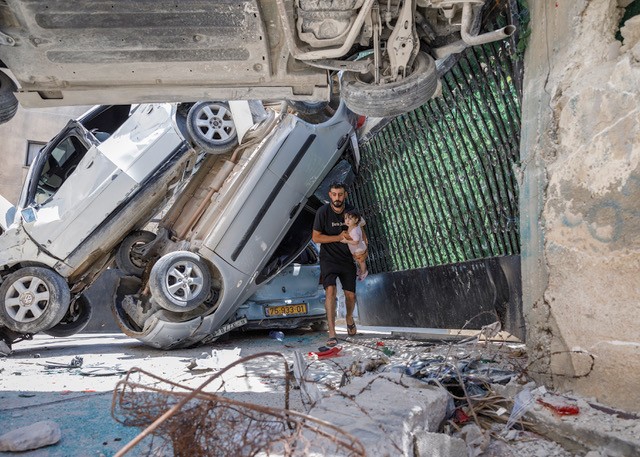
Rehab Nazal. Destruction Caused by the Israeli Occupation Forces Bulldozers in the Eastern Neighbourhood of Jenin, August 2024. Photograph.
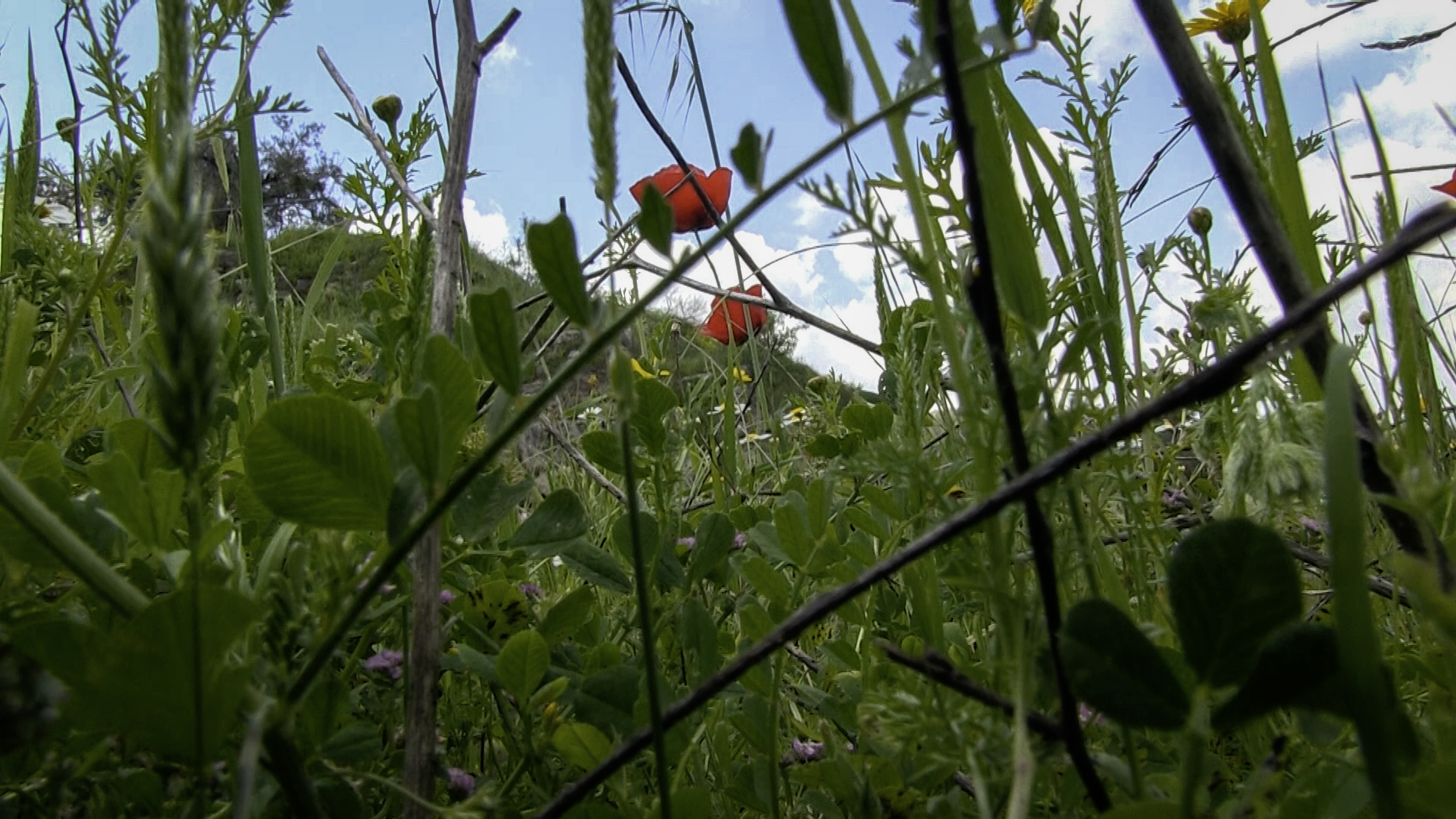
Rehab Nazal. Healing Moments. Video, 8:21 minutes. Still images. 2023.
Notes
[1] The ancient Greek term chōrographia (or chorography) derives from khōros, meaning place or region, and graphia, meaning writing or drawing. The term appears in the work Geography by the ancient Greek geographer Strabo and later reemerged during the Renaissance, notably in Athanasius Kircher’s Mundus subterraneus. Interest in this form of study continued into the late eighteenth century, before the emergence of modern scientific disciplines.
Strabo. Geography. Loeb Classical Library. Accessed via Internet Archive. https://archive.org/details/Strabo08Geography17AndIndex
Kircher, Athanasius. 1662. Mundus subterraneus. Amstelodami: Apud Joannem Janssonium à Waesberge & filios.
Buonanno, Rossella. 2014. The Stars of Galileo Galilei and the Universal Knowledge of Athanasius Kircher. Cham: Springer International Publishing.
[2] Watsuji, Tetsurō. 1961. A Climate: A Philosophical Study. Translated by Geoffrey Bownas. Tokyo: Printing Bureau, Japanese Government. Accessed via Internet Archive. https://archive.org/details/climatephilosoph0000wats_g9l6
Watsuji, Tetsurō. 2022. Intro / Climate & Culture. Introduced by Nathan Hohipuha. YouTube video, December 17, 2022. https://www.youtube.com/watch?v=AIxBjWtu-fU&t=13s
[3] Tawada, Yōko. 2025. Exophony: Voyages Outside the Mother Tongue. Translated by Lisa Hofmann-Kuroda. New York: New Directions Publishing Corporation.
[4] Dinc, Pinar, and Necmettin Türk. 2025. “Roots of Destruction: Exploring the Genocide-Ecocide Nexus through the Destruction of Olive Trees in Occupied Palestine and Rojava.” The International Journal of Human Rights, August, 1–25. https://doi.org/10.1080/13642987.2025.2541756.
IMEU (Institute for Middle East Understanding). 2022. “Fact Sheet: Israel’s Environmental Apartheid in Palestine.” November 3, 2022. https://imeu.org/resources/resources/fact-sheet-israels-environmental-apartheid-in-palestine/126.
Joseph, Lesley. 2025. “This Is What Ecocide Looks Like: Reflections on Israel’s War on the Environment in Gaza.” Journal of Palestine Studies 54 (2): 82–87. https://doi.org/10.1080/0377919X.2025.2520728
Forensic Architecture. n.d. “Environmental Violence.” Accessed January 10, 2026. https://forensic-architecture.org/category/environmental-violence
[5] Agamben, Giorgio. 1998. Homo Sacer: Sovereign Power and Bare Life. Stanford, Calif: Stanford University Press.
[6] Nazzal, Rehab. 2018. “Representation of Settler Colonial Violence in Palestine: A Thesis in Support of the Multi-Media Exhibition Choreographies of Resistance.” ProQuest Dissertations & Theses Global.
[7] Nazzal was intentionally shot with a live bullet by an Israeli sniper on December 11, 2015, while she was documenting a military “Skunk” truck spraying laboratory-made sewage onto Palestinian houses, hotels, and shops in Bethlehem. She was detained and interrogated at checkpoints for carrying a camera, and her cameras were nearly confiscated by Israeli soldiers (Nazzal 2018).
Being, Traced
Exhibition: February 12 to March 5, 2026
Reception: Thursday, February 12 from 5-7PM
Co-curated by artLAB Gallery interns Rina Liu and Nicole Iun
Stefania Dragalin, Ta Gao, Aarushi Gupta, Claire Huizenga, Kendra Jackson, Stephenie Katchabaw, Rina Liu, E Okutan, and Dhra Patel.

What is it like, being traced, through our shifting ways of being?
“Being, Traced” explores the converging paths we take as we retrace our journeys through art. The exhibition discovers traces as a mark left behind, a way of searching. By combining material processes and lived experiences, these works map how identity is continually shaped by what we carry, what we learn, and what we leave behind.
Bringing together painting, digital collage, textiles and embroidery, printmaking, sculpture, and text-based works, “Being, Traced” explores identity building in a wide, diverse scope. The exhibition includes intimate works that return to childhood memory in Patel’s (the - ra) and to self-documenting in Gao’s Transfer, both using self-portraiture as a way to trace identity through time. Huizenga’s The Hemispheres extends memory-based identity-making through a third-culture perspective, expressing the feeling of in-betweenness by living in different places.
Advocacy-driven works, such as Jackson’s Women’s March, Chile 2023 and Patel’s Tim Hennas, document the visual language of protest and respond to issues of racism and sexism through a voice of reclamation. Cultural identity is affirmed through the language of beauty in Liu’s Til We Break and Burn, where delicate materials like porcelain and paper echo how culture can be celebrated while still at risk of being reduced to a surface aesthetic under shifting trends. In Katchabaw’s The Creation of Self, beauty is intentionally curated through imperfections as a form of identity-building. By reconstructing portrait practices from high-brow art conventions, Katchabaw showcases identity as something to be assembled, revised, and ultimately claimed on one’s own terms through an empowering, queer lens.
The queer community’s lived experiences of identity are further celebrated in Dragalin’s Proud and Wine and Poetry, while Okutan’s live laugh love challenges binaries that shape our understanding of the body and our complicated relationship with it. Fusing together the intimate and the collective, Gupta’s The Girls’ Bathroom treats everyday objects and routines as a micro-archive of modern womanhood, where private rituals create bonds that shape and sustain relationships through shared space.
Across these varied forms, our featured artists trace how identity is shaped, and reshaped, through personal contemplation and shared experiences. These artworks explore identity as a state of living rather than a fixed definition. “Being, Traced” invites viewers to linger with what is partial, yet infinitely evolving. We encourage you to reflect on your own traces and how individual stories can intersect with collective memory. We know more about ourselves and the world with every step we take.
 Documentation by Dickson Bou, artLAB Gallery Preparator
Grounding: States of Gender
Gita Hashemi
Curated by Soheila Esfahani
Exhibition: January 9 – 29, 2026
Thursday, January 8 from 4–6PM
artLAB Gallery, JLVAC
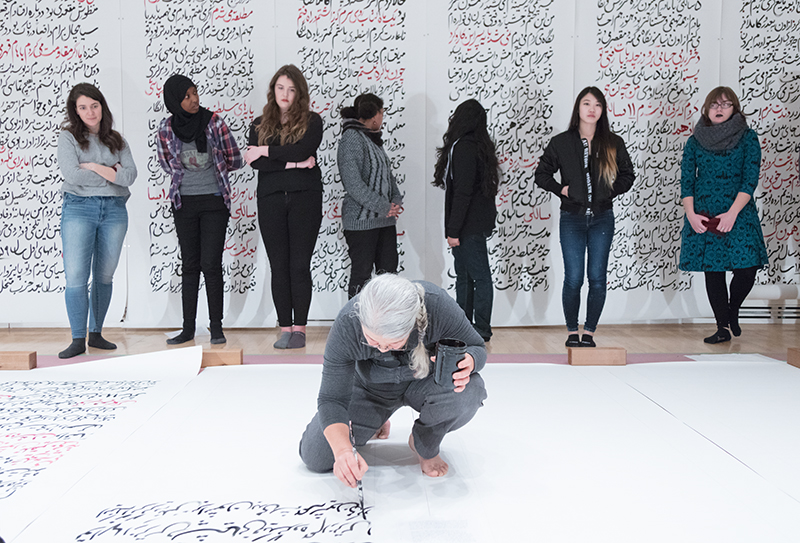
Photo credit: Justin Wonnacott
Reproducing an Iranian woman’s auto-ethnography in a visually-striking immersive installation, Grounding was created over an 8-day livestreamed durational performance in February 2017. Heralding the global #Me-Too movement and the #WomanLifeFreedom uprising in Iran, in this installation Gita Hashemi puts gender-based violence and disparity – in fact, the very construction of gender itself – in sharp focus and places the audience fully immersed in it.
Grounding combines life writing with live writing – what Hashemi calls “embodied writing,” using Persian calligraphy only to break its traditional limits. Rather than transcribing sacred text or classical poetry (formal writing by men and about men) on intimate-sized gilded manuscript paper to be owned, here Hashemi writes and records in public – on her hands and knees and marking her own reactions in red ink thus making the labour and our witnessing of it inseparable from the artwork – on massive scrolls and in colloquial language, a woman’s highly intimate stories, what remains absented from formal discourse. The artist’s original statement reads:
“The narrative has been emerging through conversations between us about how being women has affected our lives . . . Writing the self in a public space is an act of liberation when it reveals what we are trained, co-opted, forced, or acculturated to hide. In talking and then writing about intimately personal and sometimes traumatic experiences, Zahra and I have had to overcome many inhibitions. We entered each other’s lives as witness. Therefore, the process has been not only revealing but healing.”
Grounding addresses the politics of gender in contemporary Iran and beyond:
“This piece started with the dream of a space where writing could fully intertwine with embodied gestures and performative expression to explore the potentials of written word in creating visual-emotional landscapes. While I was dreaming, voices and images from the outside world infiltrated in my dreamscape: There is the man who is now president saying “grab [women] by the pussy” and the over-exposed image of an imported made-up doll standing beside him. There is the campus rapist walking free, and the radio host acquitted of sexual assault. There were Pussy Riot in Russia, masses of women in rallies against rape in India, and Women’s March on Washington. There, is the Islamic State, and here, in the “West,” and around the globe is the state of poverty that increasing numbers of women are pushed into, courtesy of neo-liberalism and politics of austerity.”
Grounding was selected as the monographic exhibition of the year in 2017 by the Ontario Association of Art Galleries. The jury cited the work for “representations of freedom and gender that transgress geographical, political, and cultural boundaries.” It was originally created at Carlton University Art Gallery as part of Open Space Lab, curated by Anna Khimasia.
This installation at the artLAB includes the original scrolls written in 2017. The video combines the footage shot on days 1 and 2 of the livestreamed performance (the first 6 scrolls), played here at 2-20x normal speed.
Exhibition text by Mina Rastgu.
Read the review: “Grounding: States of Gender”: Persian calligraphy documents memoir of womanhood in Iran. Written by Incé Husain. Antler River Media Co-op
With generous support from: Department of Visual Arts, Faculty of Arts & Humanities, Centre for Research on Migration and Ethnic Relations, Department of Languages and Cultures, Department of Gender, Sexuality & Women's Studies.
 Documentation: Dickson Bou, artLAB Preparator
AT THE EDGE: REVOLUTION
Curated by Katelyn Halter
artLAB Gallery Intern
Exhibition: January 9 – 29, 2026
Thursday, January 8 from 4–6PM
Cohen Commons
This exhibition revolves around the fight for peace in a world filled with conflict. From struggles of individuality amidst rapidly changing political climates to humanity's efforts to make the world a better, kinder place, AT THE EDGE: REVOLUTION provides viewers the opportunity to see the current state of today's world through an artistic lens.
 Documentation: Dickson Bou, artLAB Preparator
Embassy Cultural House
Not/For the Money
Publication Launch
January 22, 2026 from 4 - 6 PM
Cohen Commons, JLVAC
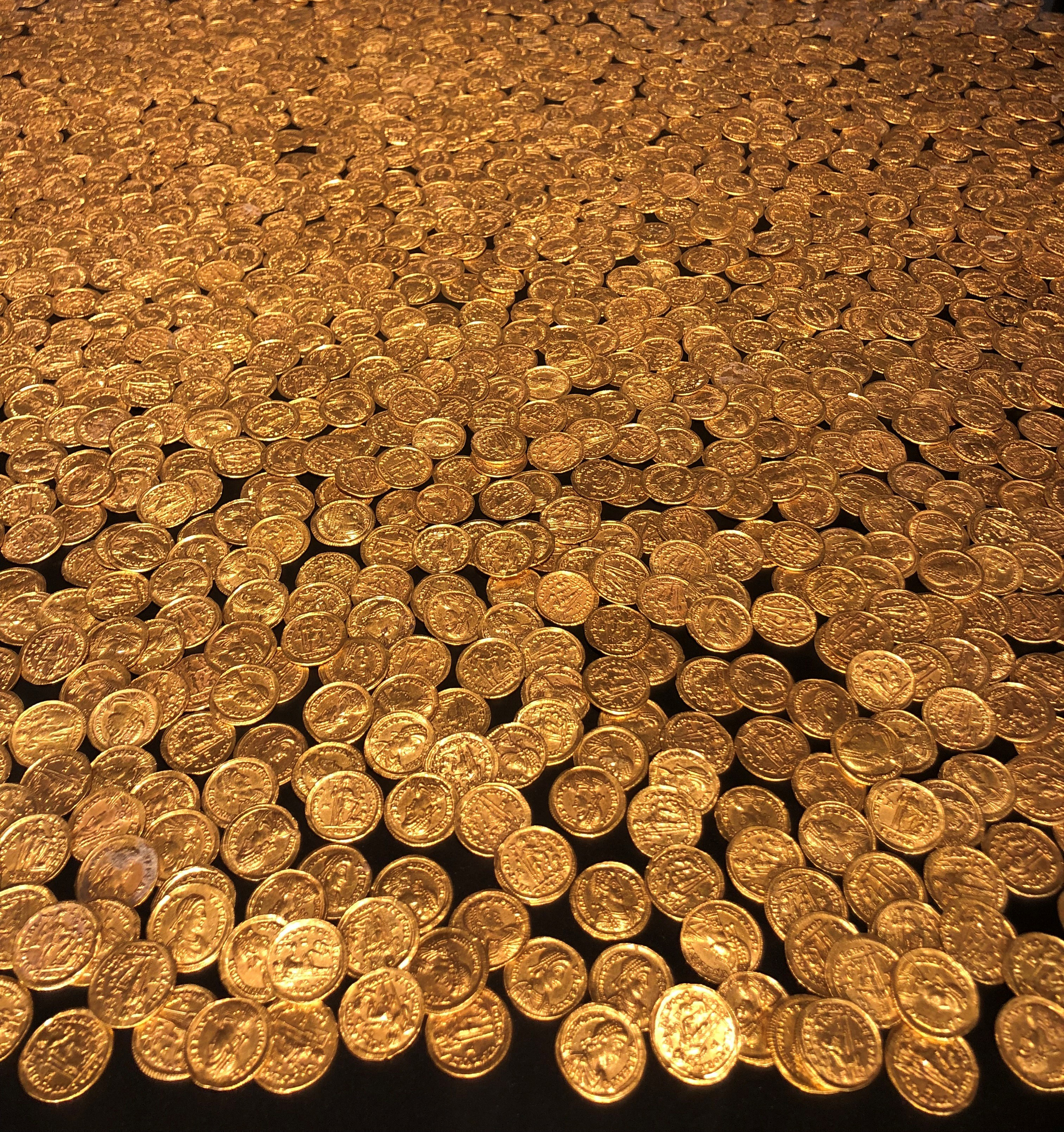
Image:Chimtou gold coin hoard, Bardo Museum, Tunis, Tunisia
Photo credit: Ron Benner, 2024
The Embassy Cultural House (ECH) is pleased to launch its most recent publication Not/For the Money, in partnership with Western University's Department of Visual Arts. Not/For the Money is an international online group exhibition that highlights contributions by artists and cultural workers that examines themes related to money, capital, and value.
This publication is ECH's 10th publication since its relaunch in 2020 and has been designed by Olivia Mossuto, Coordinating Editor of the ECH, and is printed in an edition of 500 copies, full colour, 52 pages.
Money is a very urgent issue for many artists. An aspect of this issue is the general public’s inability to value the arts and cultural workers’ vital role and impact within any community. There is a lack of understanding in the way cultural workers survive and build meaningful lives, often with a minimum of resources. The issue of money, the impact of economic disparity, and insecurity dominates many of our lives. Without a stable income, most people struggle to afford basic necessities that are required for quality of life.
The theme of money is addressed frequently within the art world, but usually it is in the context of the art “market,” commercial auctions, and wealthy collectors. Many artists work to imagine and engender new relationships, value systems, and ways of being. As journalist Eric Reguly wrote in The Globe and Mail business section, “You don’t necessarily need buckets of money to succeed. Sometimes imagination and the courage to break the rules can do the trick.”
Not/For the Money includes contributions by Ron Benner, Karl Beveridge, Lily Cho, Matthew Dawkins, Holly English, Soheila Esfahani, Kelly Greene, Jamelie Hassan, SF Ho, Michael Maranda, Alistair MacKinnon, Patrick Mahon, David Merritt, Mohamed Monaiseer, Sheri Osden Nault, Wanda Nanibush, Shelley Niro, Claudia Sambo, Ruth Strebe, and Jeff Thomas. This ECH project has been organized by Ron Benner, Jamelie Hassan, Olivia Mossuto, and Mireya Seymour.

FALL 2025
AJE24
Exhibition: November 13 – December 4, 2025
Thursday, November 13 from 6–8PM
People’s Choice voting: 6-7PM
AJE Award Announcements: 7:15PM
artLAB Gallery
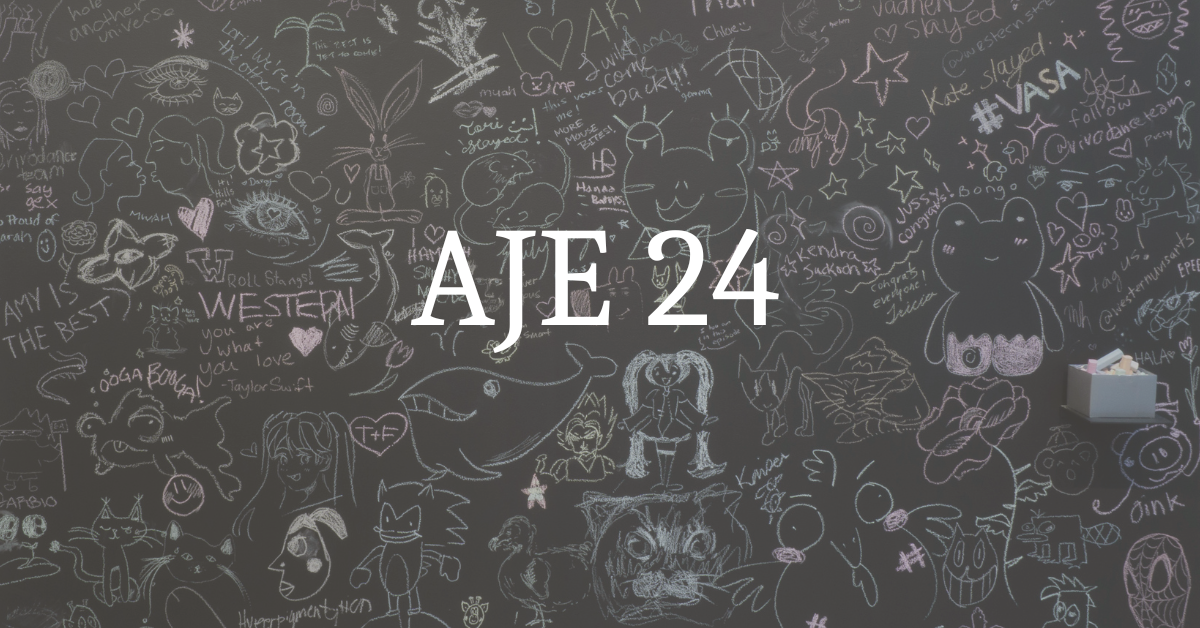
Celebrating twenty-four years the "Annual Juried Exhibition" continues to be one of the Department of Visual Arts most highly anticipated undergraduate exhibitions. This diverse show supports the production of new work made in a variety of mediums including painting, sculpture, print, video, and photography. Exhibited works were selected by a professional jury who consider creativity, concept, materiality and technique. This year’s show is indicative of the resilience and dedication our students continue to demonstrate.

Design by Stefania Dragalin, artLAB Gallery Intern.
Carbon Flurry
Curated by Imogen Clendinning
Danielle Petti, Racquel Rowe, Emelie Robertson and Behnaz Fatemi
Exhibition: November 13 – December 4, 2025
Thursday, November 13 from 6–8PM
Cohen Commons
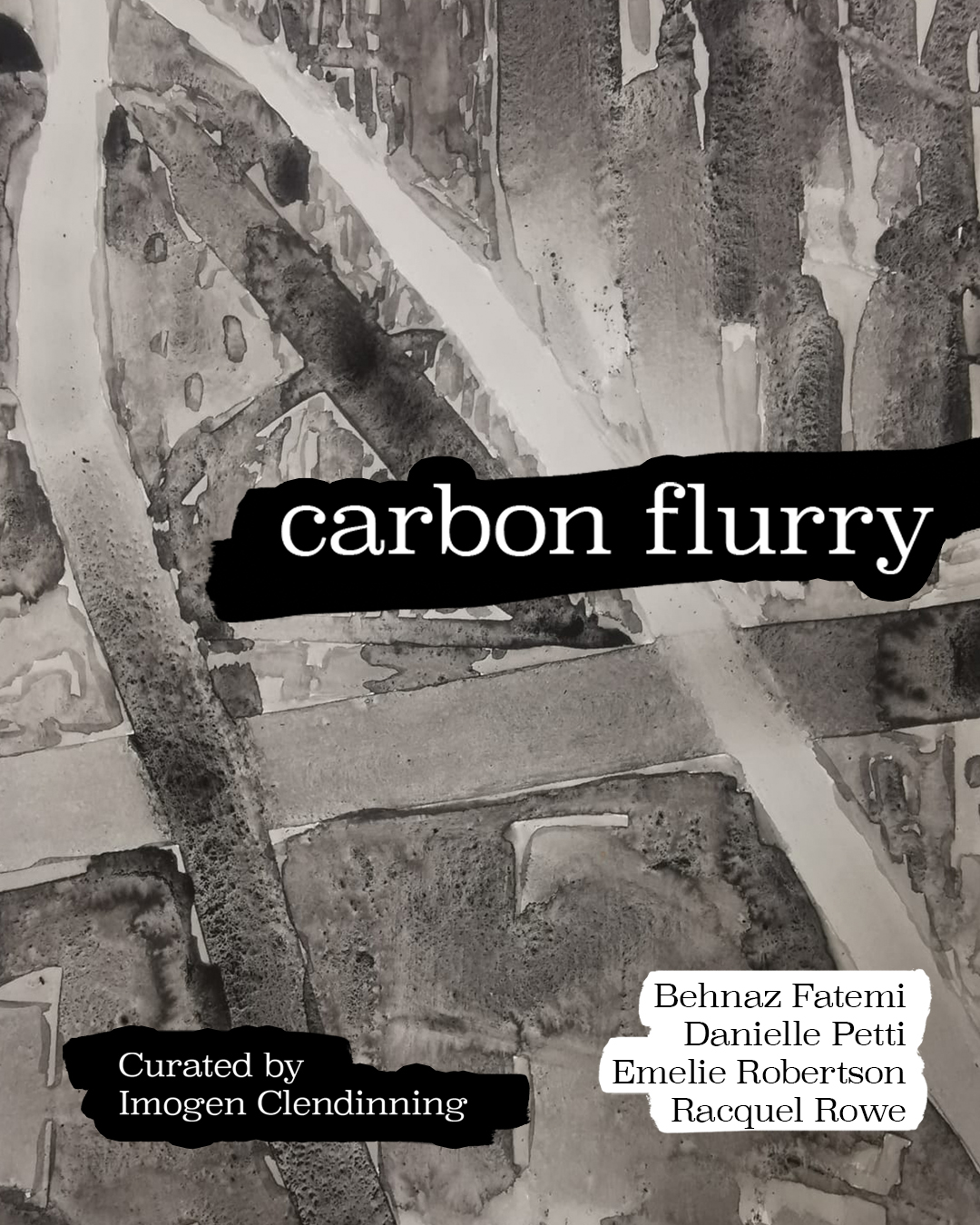
In Carbon Flurry, artists Danielle Petti, Racquel Rowe, Emelie Robertson and Behnaz Fatemi conduct new creative interventions and experimentation as they animate the engineered material biochar. Created using a process of pyrolysis--a chemical decomposition of matter through heat--biochar is a material remnant of waste management technologies that seek to mitigate climate change, by capturing carbon and storing it in soil for hundreds or thousands of years. In Carbon Flurry, the artists respond to the agency of biochar, allowing the material to take on new layers of meaning beyond its utility as the biproduct of waste. Petti, Rowe, Robertson and Fatemi emphasize the affectual and tactile qualities of its form, as well as the potentiality of biochar as matter; how it abstracts geologic time, fossilizing abundant carbon-emitting chemicals and holding them in stasis.

The More Elegant and Graceful Plant
Exhibition: October 9 – October 30, 2025
Reception: Thursday, October 9 from 6–8PM
artLAB Gallery, JLVAC
Curated by Dr. Cody Barteet and Natalie Scola
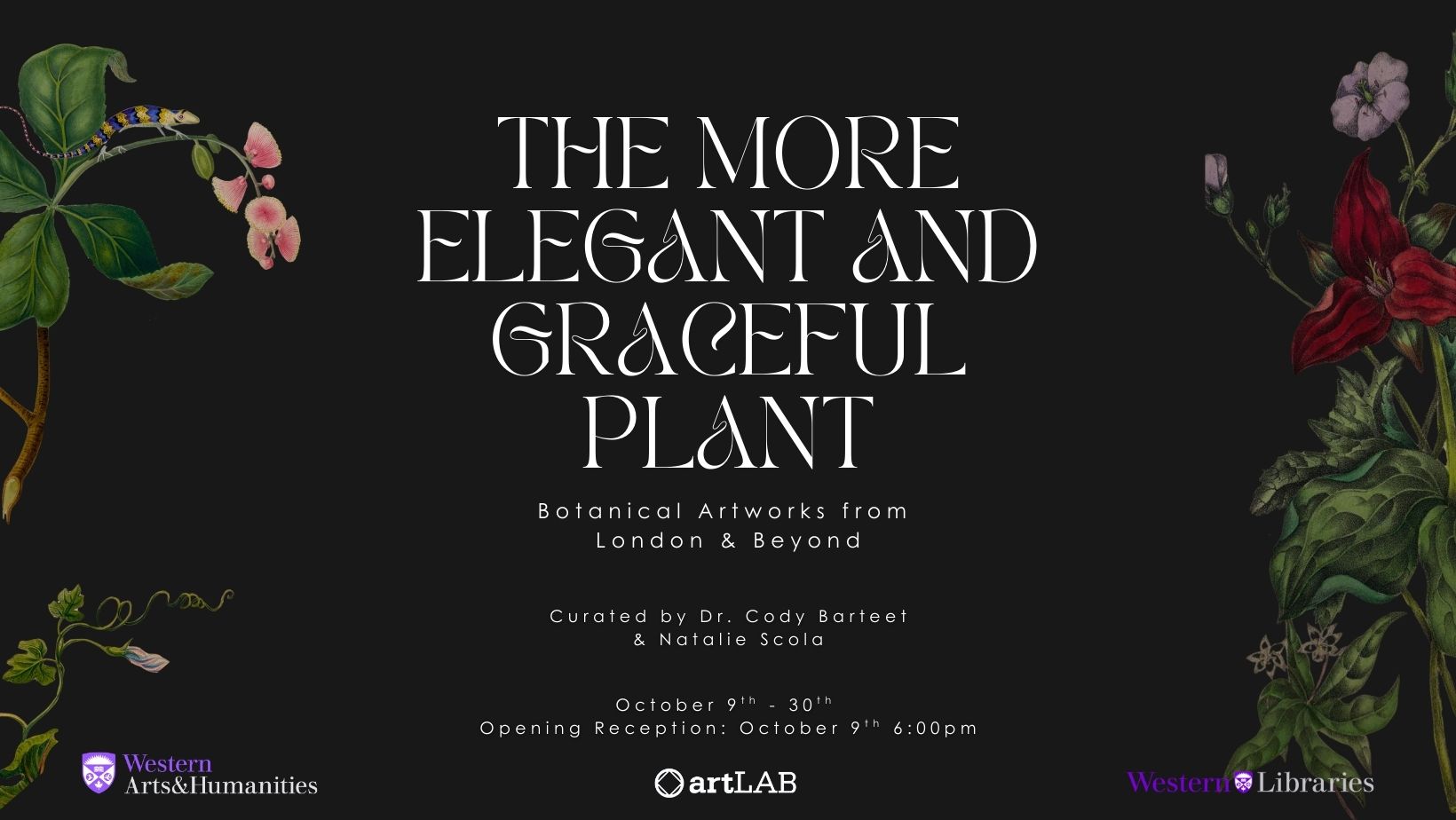
This exhibition features works by Jamelie Hassan, Ron Benner, Olivia Mossuto, Steve Sabella, Carole Conde’ & Karl Beveridge, Julio Jorge Celis Polanco and archival materials from Western Archives and Special Collections and The Dr. Laurie L. Consaul Herbarium. Music for the exhibition is shared courtesy of the Digital Analysis of Chant Transmission (DACT).
Botanical art captures the worlds plants inhabit and the hands that study them. For centuries, artists have turned to plants not only as subjects to be studied and represented, but also as materials - pigments, dyes, and papers drawn from the natural world. These works map how plants were collected, named, and carried across continents. At the same time, they root us in gardens and communities, revealing how plants have cultivated knowledge, beauty, and belonging. Bringing together archival materials and contemporary art, this exhibition invites reflection on the intertwined histories of empire and science, and on the role of plants in shaping both past and future environments.
Support for this exhibition is provided by Western Research.
 Documentation by Dickson Bou, artLAB Gallery Preparator
reframing STEM
Exhibition: October 9 – October 30, 2025
Reception: Thursday, October 9 from 6–8PM
Cohen Commons, JLVAC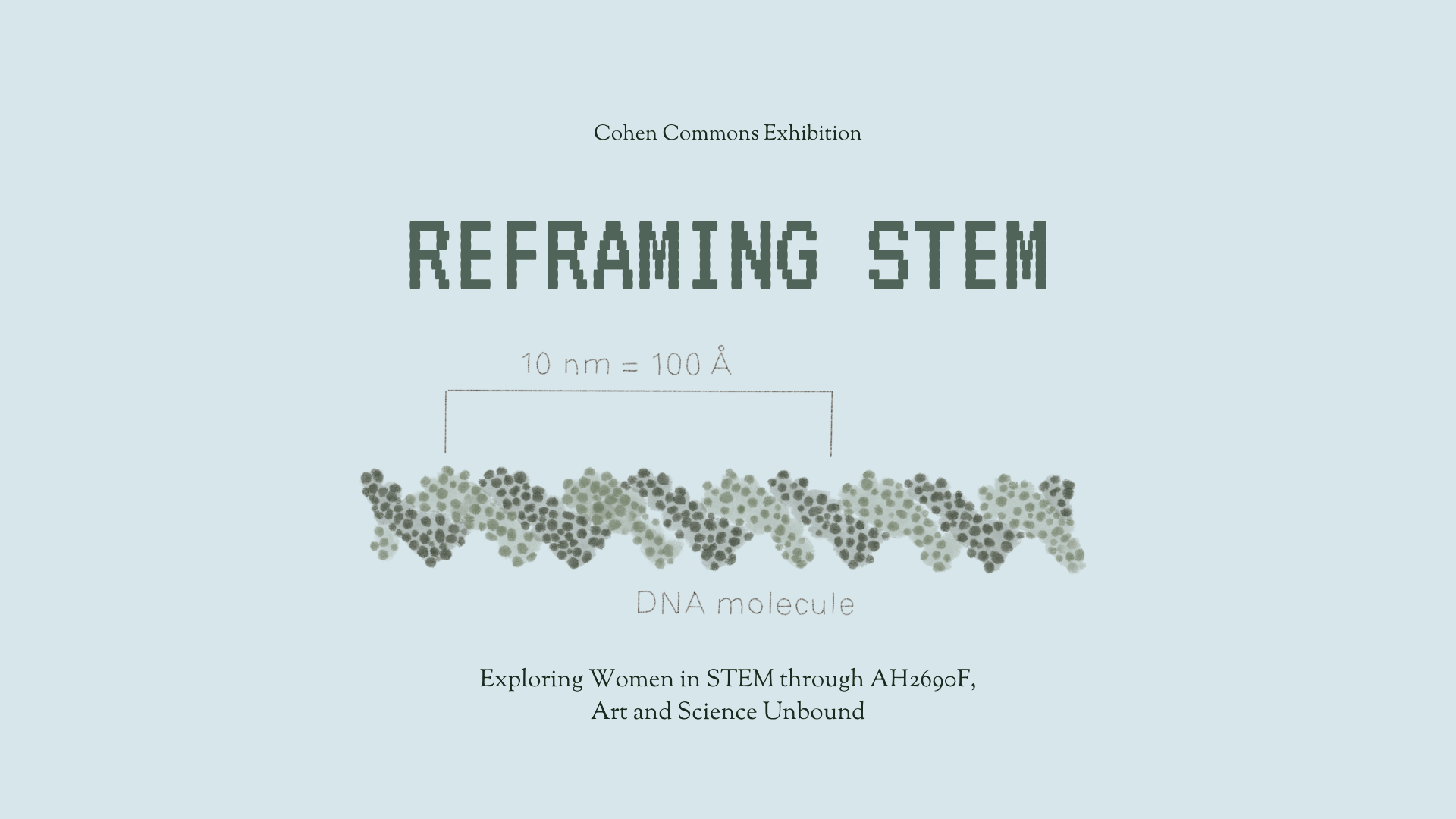
featuring works by: alexandra molenkamp, ambar kaushik, claire huizenga, elyse hughes, ellie marie smith, emily jane margaret taylor, fong lam nicole iun, jamie vojvodin, jennah hynds, karam bhuee, klay van lankveld, laura clavijo gutierrez, lauren grace zeleny, leo hodgson, matthais leon hayes, miaka duan fredin, parisa lahooty, soraya patel, sofia isabel mendoza martinez, sydney elizabeth norton, urvi uppal, vanesa lares diez, violet dieroff, zoe mckeon-shaw, wilson atterson
the history of science, technology, engineering, and mathematics is often told as a linear ascent, a sequence of singular discoveries attributed to a narrow pantheon of celebrated men. yet this narrative is less a neutral chronicle of progress than a frame: constructed, rehearsed, and institutionalized to eclipse entire constellations of knowledge. reframing STEM intervenes in this story, foregrounding women whose contributions fracture the myth of the solitary genius and reveal science as a profoundly collective, contingent, and contested pursuit.
developed by the students of ah2690f: art and science unbound, the exhibition bridges historical research and creative inquiry to illuminate the intellectual labour of women in STEM across centuries and geographies. together, these projects form a constellation that resists linear historiography, instead orbiting around a pluralized understanding of innovation.
to “reframe” is not merely to recover what was forgotten, but to interrogate the epistemological architectures that produced absence in the first place. the works on view ask how disciplinary boundaries, institutional gatekeeping, and cultural bias have shaped whose knowledge counts as scientific truth. by entwining rigorous archival research with speculative and imaginative response, students invite audiences to not only remember these women but to reconsider the very frameworks through which knowledge, and its authority, is produced.
reframing STEM opens onto larger questions: what might science become when its history is told not through the lone voice of invention but through a chorus of minds, each embedded in its own time, culture, and ecology of thought? what new possibilities unfold when we acknowledge science as a site of entanglement—of cross-cultural transmissions, embodied insights, and cosmological wonder? by situating women as vital participants in shaping STEM, this exhibition does not simply fill historical lacunae; it insists on a reimagining of how we conceive knowledge itself: relational, interstellar, and in constant motion.
 Documentation by Dickson Bou, artLAB Gallery Preparator
Mid-Autumn (Moon) Festival
Organized by Yan Zhou, Curator-in-Residence
Wednesday, September 17th from 4-6:30PM
Digital Creativity Lab (VAC 137).
In this project, we explore the ecology of the diverse cultures and histories of diaspora communities, foregrounding their role as caretakers and warriors, upholding justice and solidarity with both local and home countries in their shared struggles against environmental, social, and political injustice wherever they live and prosper.
As part of the community engagement components, the “Diaspora Kitchen” program organizes events that bring together local and international communities to share food, stories, memories, and works. In the first “Diaspora Kitchen” event, we will celebrate the Mid-Autumn (Moon) Festival.
The event will include three activities:
1: Mia Ouyang, a mathematician and visiting scholar at Western University, will lead the mooncake sharing and moon cake dice game (The Moon Festival Bóbǐng Game). This local tradition is connected to the complex history of Taiwan and mainland China, as well as to the ancient Chinese civil service examination system.
2: Andy Patton, a painter and a poet, who is an alumnus of Visual Arts at Western, will read the poem “Spring River in the Flower Moon Night” by Tang Dynasty poet Zhang Ruoxu. Andy said this poem is “the one poem I would save from the universal wreckage if all of China’s great poetry was being destroyed.”
3: We will screen a short film, titled “Qingbuliang & Tabbouleh” (تشينج بو ليانج & تبولة).: In the film, displaced Syrian children and their families in the Bekaa Valley, Lebanon and migrant workers’ children in Haikou City, Hainan Island, China, met online and shared their favorite food: the Hainan Island fruit bowl “qingbuliang” and the Middle Eastern salad “tabbouleh”, during the 4th Children’s Art Festival of Kindergarten Without Walls in Haikou, China in August 2025. During the screening, we will also share “Qingbuliang & Tabbouleh”.
 Documentation by Dickson Bou, artLAB Gallery Preparator
liminalenergyzerosignalstilldevilobject
Natasha Beaudoin, Eric Cameron, Sebastian Evans, Jennifer Hamilton, Moira Hayes, Cassie Packham, Emelie Robertson
Exhibition: September 4 – September 28, 2025
Reception: Saturday, September 27 from 2-4PM
artLAB Gallery, JLVAC
We occupy an entangled circuitry of institutional connections and nodes, a shared bandwidth, where disparate practices hum, flicker and interfere.
At the midpoint of their academic journey, candidates of the 2026 Master of Fine Arts program come together to explore themes and mediums ranging from the natural and the haunted to painting and video. This exhibition is not curated. It is not a thesis, nor a resolution. Each work in this show is a signal: sometimes clear, sometimes scrambled. Together they build a constellation of transmissions that do not seek to align but rather to co-exist. The artists have chosen not to resolve their differences, but to amplify the static between them.
Instead of a curated narrative, this exhibition offers a linkage, a connective tissue made of tension, refusal and resonance. The artists invite viewers to tune in, sit with the noise, and find meaning in the gaps.
 Documentation: Dickson Bou, artLAB Gallery Preparator
Human Impressions: Traces from the Western Print Archives
Exhibition: September 4 – September 28, 2025
Reception: Saturday, September 27 from 2-4PM
Cohen Commons, JLVAC
Curated by Jennifer Hamilton
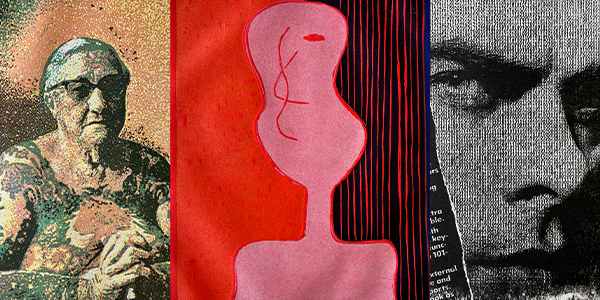
Image(s): Laura Payne, N. Schlesak and Dan Vogel
The multiple exists to disseminate—and from that, archives emerge. This exhibition features a selection from the Department of Visual Art’s print collection at Western University, showcasing work completed over the past 50 years. These alumni artworks highlight the human experience embedded within the technical processes of printmaking. The human form is embodied within these selected works, showing a historical collaboration between machines and the individual.
This exhibition attempts to challenge critiques of human authenticity within a reproduction while highlighting a printshop’s ability to create a community within any arts institution. The prints chosen for this exhibition include examples from each decade with a varied selection of printmaking, including relief print, intaglio, lithography and serigraphy.
 Documentation: Dickson Bou, artLAB Gallery Preparator


