
DesignEd Workshops, Events, & Community
Teaching Support
To contact the DesignEd team, please use the following methods:
- Curriculum & course development support:
Project request form/appointment - OWL or educational technology support:
Submit a request via Jira - All other inquiries:
Email DesignEd@uwo.ca
Events
Rethinking Teaching, Learning, and Assessment in Health Disciplines
Give us Feedback!
DesignEd Workshops, Events, & Community

2026 Sessions
DesignEd offers a series of sessions on topics related to teaching, learning, course design, media development, and other key skills for teaching in higher education. Explore our upcoming and past offerings below.
Upcoming Session
Beyond the AI Debate: Rethinking Teaching, Learning, and Assessment in Health Disciplines
Friday, November 20, 2026 | 12:30–2:00 p.m. | Online (Zoom)
About the Session
We know that in the age of Artificial Intelligence (AI), as educators, you are constantly faced with new questions about what students need to learn, how to assess their learning, and how AI can meaningfully support both teaching and student success. To explore these questions, we've invited Danielle Manley, who has been actively integrating AI into her teaching and exploring how it can transform learning and assessment in health professions education.
Danielle Manley will draw on her experience in nursing education, health informatics, and educational innovation to explore how AI is reshaping expectations for student learning and creating opportunities to rethink teaching and assessment.
Help Shape the Session!
Danielle would like to tailor the session to your interests, questions, and needs. Your responses will help guide the topics, examples, and practical applications discussed.
Register for the November 20 session
About the Facilitator
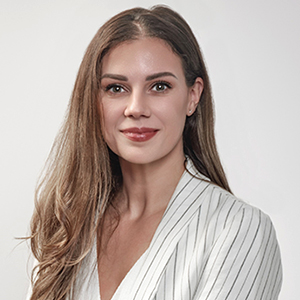
Danielle Manley, RN, MEd, EdD(c), CMS-AIC, CCRN(c)
Associate Professor and Director of the School of Nursing, Carleton University
Danielle Manley is a registered nurse whose career has been largely focused on health informatics, technology, and innovation. With a Master of Education from Queen’s University specializing in assessment, evaluation, and program development, and ongoing doctoral studies in Educational Leadership at Western University, her work bridges the traditionally separate worlds of healthcare, technology, and education.
Her approach to integrating artificial intelligence (AI) into higher education focuses on developing technological competencies both explicitly, through curriculum and learning outcomes, and implicitly, through thoughtfully designed assessments and learning experiences that encourage students to critically evaluate the capabilities, risks, and limitations of emerging technologies.
Recognizing that academic perspectives on AI range from outright prohibition to its intentional inclusion as a required learning tool, Danielle advocates for establishing a shared understanding of AI before determining how it should be used. This includes distinguishing artificial intelligence, machine learning, generative AI, large language models, and agentic technologies.
Drawing on practical classroom experiences, Danielle explores AI integration across multiple levels—from institutional frameworks, curriculum development, and assessment design to AI-supported student learning, customized GPTs, and personalized automation workflows.
Central to her approach is the belief that as AI expands what students can accomplish, educators must reconsider—and potentially raise—the expectations of what students should be able to demonstrate.
📚 Past Workshops (click to expand)
Strengthening Exam Integrity Practices Through Experience and Evolving Awareness
Date: July 10, 2026
Maintaining exam integrity requires thoughtful design and responsive practice. In this session, Dr. Woods reflected on how her experiences with academic misconduct, mostly within proctored exams, have shaped her approaches to exam procedures, proctor training, and investigations. Using anonymized examples, she highlighted patterns of misconduct and practical adjustments made to reduce opportunities, including changes to exam design and proctoring practices.
The session emphasized iterative learning by examining what worked, what did not, and how small, evidence-informed changes can support integrity. Dr. Woods also discussed her approach to investigating suspected misconduct, including more effective questioning strategies developed in the absence of formal training.
Framed within a broader institutional context, the session invited educators to reflect on their own practices and consider how evolving experience and awareness can inform approaches to promoting academic integrity.
Presenter: Dr. Anita Woods, Teaching Scholar in the Department of Physiology and Pharmacology at Western University. Dr. Woods has extensive experience coordinating large undergraduate courses and served as Undergraduate Chair from 2019 to 2024, overseeing and investigating cases of academic misconduct. Her scholarly interests include student motivation, belonging, and inclusive instructional images. She is the founder of EveryBodyPhysiology.
Narrative Medicine, Reimagined: Counterstorytelling in the Health Sciences Classroom
In this interactive workshop, participants explored narrative medicine as a framework for helping students listen more deeply, reflect more critically, and engage more ethically with the stories of illness and healing.
Drawing on the foundational work of Dr. Rita Charon, the session invited participants to practice key narrative medicine methods and consider how to adapt these tools for a range of health sciences courses. The session also considered how critical race theory’s method of counterstorytelling invites students to recognize the ways race, power, and lived experience shape whose stories are heard, believed, and acted upon in healthcare settings.
Presenter: Dr. Brooke Covington (PhD) is an Assistant Professor of English at Christopher Newport University, where she is also the Academic Director of the Center for Community Engagement. Her scholarly work sits at the intersection of narrative medicine, community-engaged pedagogy, and public memory. She is a contributing author to Narrative Medicine: Trauma and Ethics (Vernon Press, 2024) and has facilitated narrative medicine workshops for academic and community audiences. Her teaching and research are grounded in a commitment to storytelling as a form of knowledge, advocacy, and care.
All About AODA
In this session, Johann Walter (our Digital Media Designer), guided us through what AODA is, who needs to implement it, and what implementing it can look like. He also shared resources that can help us make our work AODA compliant.
Presenter: Johann Walter
Integrating Sensitivities to Indigenous Matters into Teaching and Learning
Dr. Cathy Richardson Kineweskêw discussed her goals as the Chair of Indigenous Healing Knowledges at Concordia University. Her work focuses on decolonizing the classroom through dignity-centered practices, working in circle, centering Indigenous and marginalized knowledges, and exploring how to attend to the Truth and Reconciliation Commission’s recommendations. She also emphasized cultural safety and creating inclusion and belonging in classrooms and workspaces.
Presenter: Dr. Cathrine Richardson Kineweskêw
Using Structure to Promote Student Engagement
As instructors, we often have a vision of how we want students to engage with us, with the material, and with each other. Then, we get to the classroom, and students don’t always engage in those ways. In this session, Dr. Cait Kirby used the window of tolerance as a framework for understanding how emotional dysregulation can result in a lack of engagement. Discussions included strategies for leveraging structure to support student regulation and promote engagement.
Presenter: Dr. Cait Kirby
Incorporating Reflection into Your Courses
Reflections are commonly used as a graded or non-graded course activity. This session explored the benefits, challenges, design considerations, and practical examples.
Presenters: Dr. Anushka Ataullahjan, Assistant Professor, School of Health Studies, Western University
Najmeh Keyhani, FHS Curriculum Specialist
Using AI to Facilitate or Enhance Your Teaching
Join us for a peek into how other faculty members are using AI in their teaching. You'll also get the opportunity to try some tools yourself.
Presenters: Dr. Andrews Tawiah
Najmeh Keyhani
Julie Whitehead
Decolonizing Evidence-Based Healthcare
This session applied decolonial and Indigenous lenses to evidence-based healthcare and explored intercultural counseling strategies.
Presenter: Dr. Jaris Swidrovich
Clarifying Policies on Scholastic Offenses & Academic Considerations
A detailed overview of academic considerations, student absences, plagiarism, AI, and exam policies.
Presenter: Dr. Andrew Johnson
Health Professions Education from a Justice Lens
This session examined how curricular choices impact students from equity-deserving groups, with scenario-based problem solving.
Presenters: Dr. Tal Jarus & Dr. Hiba Zafran
Interprofessional Education (IPE)
What is it? Why do we need it? Ways to incorporate IPE into courses.
Presenters: Dr. Laura Brunton & Najmeh Keyhani
Flexible Assessments: Why, How, and Examples
Presenters: Dr. Sean McWatt & Najmeh Keyhani
Teaching Supports from the DesignEd Team
Presenters: Najmeh Keyhani, Julie Whitehead, Dave McNulty, Gelila Ayele
- Recognizing & Addressing Student Learning Challenges
- Welcoming Gradescope Into Your Life
- Navigating Difficult Conversations
- Antiracism Pedagogy
- Understanding AI in Education
- Introduction to Open Education
- Universal Design for Learning
- Teaching HyFlex Classes
- Digital Accessibility
- Alternative Assessments
- Ask an Instructional Designer (Recurring)


