
Search Website

Program Information
Program Information
Program Information
About the Program
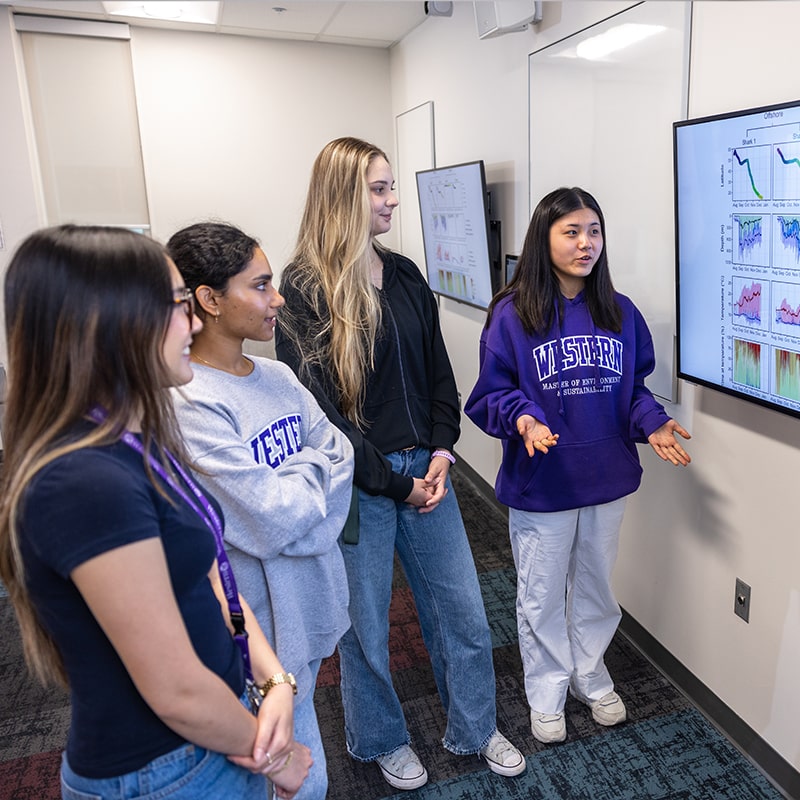
The Master of Environment and Sustainability (MES) program is an accelerated, interdisciplinary program that combines technical skills, paid co-op experience and real-world consulting projects. You'll graduate ready to launch a career in government, consulting, NGOs, academia or the private sector, driving sustainability through policy, research and strategy.
- Format: Full-time, in-person
- Start term: September
- Duration: 12 months (8 months coursework + 4 months co-op)
- Application deadline: January 15 (International); May 1 (Domestic)
- Contact: MES.inquiry@uwo.ca
Program Structure
Explore the components of the MES program in the tabs below.
Term 1
In the first term (September - December), you'll take courses such as:
- Community-based Sustainability – Envrsust 9011
- Planning & Management – Envrsust 9012
- Environmental Data Analysis & Visualization – Envrsust 2014
- Ecosystem Health – Envrsust 2017
Term 2
In the second term (January - April), you'll complete your classes, taking courses such as:
- Building Sustainable Business – Envrsust 9013
- Engineering Solutions – Envrsust 9015
- Indigenous-Led Approaches to Environment & Sustainability – Envrsust 9018
- Consulting Project – Envrsust 9200
Cooperative Education Experience
Fundamental training and coaching are integrated throughout the program to prepare you for success in your co-op work term and future careers. You'll focus on:
- Career planning, professional documents, interviewing strategies, and networking
- Interpersonal competencies, value proposition, goal setting and the power of storytelling
- Cultural competency, including allyship principles, inclusive leadership, diverse work teams and respectful Indigenous consultation
Workshops
Learn from the best in the field. Throughout the fall and winter terms, industry experts lead 15+ intensive professional workshops exclusively for MES students. The workshops are tailored to current and emerging trends in the environment and sustainability job market.
Networking
Networking opportunities with relevant industry partners take place throughout the fall and winter terms. These events help you build your professional network, connect with potential employers and learn how to effectively position yourself for your career.
Industry Engagement
Throughout the academic terms, you'll work on cases and with real clients through consulting projects. You'll build the skills needed to succeed in a professional setting, solving problems while learning how to create meaningful impact.
Professional Career Management
Through professional seminars specifically designed with an environmental sector talent focus, interview preparation, career coaching and alumni speakers and mentors, you'll develop skills and strategies to ensure success in your job search, co-op roles and future career journey.
Inclusion in the Workplace
You'll develop critical understanding and strategies to foster and advance inclusion within workplaces, teams and communities. Learning includes thriving in diverse work teams, inclusive leadership, working across global teams, allyship principles and workplace inclusion strategies.
Indigenous Allyship
Through collaborative learning, certificates, Indigenous speakers and engaging sessions, you'll deepen your understanding of historical racism experienced by Indigenous Peoples. You'll also develop commitments and allyship principles to foster meaningful and respectful relationship with Indigenous Peoples in research, consultation and workplaces.
Co-op Term
In the final term (May - August), students (you) will apply the environment and sustainability principles and skills gained in the program in an employment setting. You’ll gain valuable work experience, build your industry network, and launch your professional career!
The co-op is a mandatory component of the MES program and successful completion is required to graduate. You must complete 500 hours in their role during this term.
Industries
- Government
- Renewable Energy
- Conservation
- Policy
- Sustainable Finance and Investments
- Transportation
- Environmental Planning
Roles
- Policy Analyst
- Sustainability Coordinator
- ESG Analyst
- Conservation Intern
- Junior Project Manager
- Energy Analyst
- Environmental Planner
- Environmental Technician
- Sustainable Impact Analyst
- Field Researcher

Real-World Work Experience
Experiential learning is a core element of the MES program. Building on the course-based portion of the program, experiential learning takes place through consulting projects and the co-op term. Both opportunities allow you to apply advanced knowledge in a real-world setting while developing a network of professional contacts. This is an outstanding opportunity to showcase your ability to perform in a professional environment and in an environment or sustainability role.
Previous Employers
MES is proud to work with a vast number of employers who return year after year to hire co-op students. Many graduates are hired into full-time roles after completing the program.
Public Sectors
- Environment & Climate Change Canada
- Agriculture & Agri-Foods Canada
- Ministry of the Environment, Conservation and Parks
- Ministry of Transportation
- Municipalities
- Universities
Private Sectors
- Renewable Energy
- Financial Institutions
- Manufacturing
- Real Estate
- Waste Management
- Consulting
Non-Governmental Organizations
- Conservation Authorities
- Land Trusts
- Sustainable Agriculture
- Climate and Clean Air
- Forestry
- Environmental Education
Apply to the MES Program
Application Deadline:
International Students – January 15
Domestic Students – February 1 (early consideration); May 1 (final deadline)
After Graduation
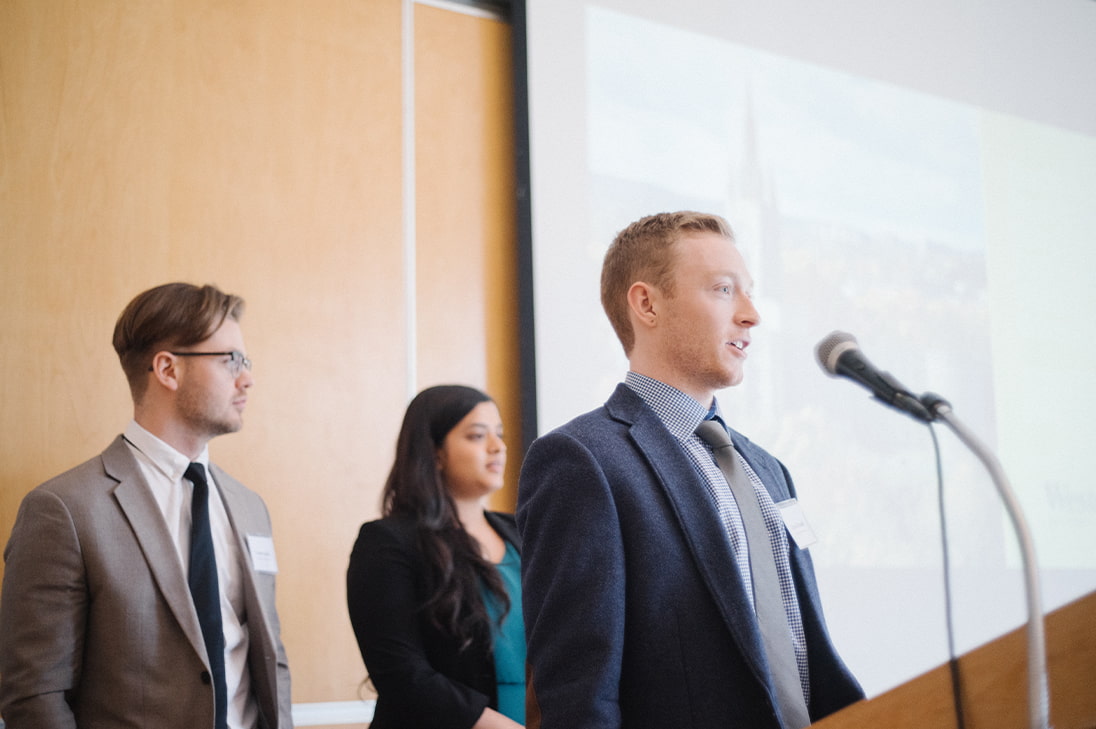
MES graduates have found tremendous success post-graduation and many move quickly into leadership roles, including:
- Manager, Climate, Environment & Sustainability
- Energy Management Specialist
- Project Lead, Energy & Facilities
- Senior Environmental Planner
- Director of Sustainability
- Sustainability Business Development Manager
- Senior Manager, Sustainable Finance
- Manager, Climate Strategy
- Wildlife Biologist
Our Graduates

Zoë Kreze
MES '24
The co-op experience was a game-changer for my career trajectory. Within three months, it transitioned into a full-time role, and I was promoted soon after. The program gave me the tools to bridge sustainability principles with engineering projects, enabling me to align our internal sustainability objectives with our customers' goals. Overall, MES positioned me competitively for sustainability positions in today's market.
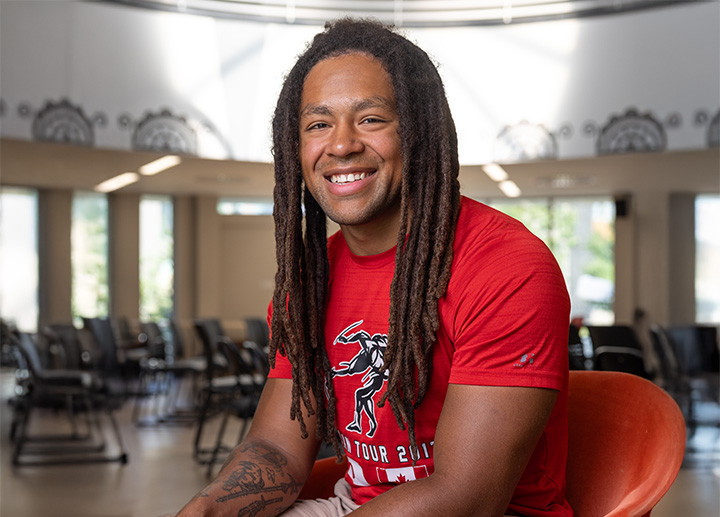
Howard Moffatt
MES '25
The MES program strengthened my skills and prepared me to excel in environmental roles. The Ecosystem Health independent project sharpened my ability to ask the right questions, analyze data and make informed sustainability decisions. Combined with my co‑op in the agricultural sector, these experiences support my now permanent role in delivering energy‑efficiency solutions to farmers and fostered a lifelong learning mindset for my career.
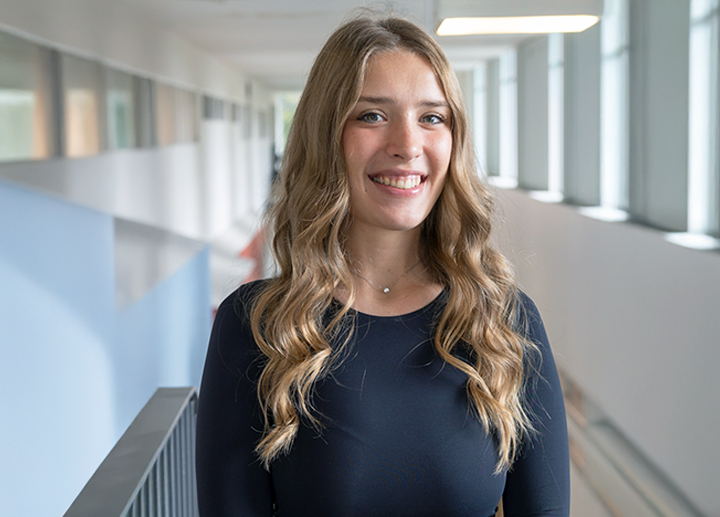
Amy Nevills
MES '25
The program’s focus on equity, diversity and inclusion shaped how I approach sustainability planning and community engagement, helping me understand how decisions affect people differently and why inclusive engagement matters. Through applied learning and my co-op experience, I was able to move from theory to practice and gain a clear understanding of implementing sustainable solutions. MES turned what once felt like a goal into a career I’m proud to be in.