
Search Website
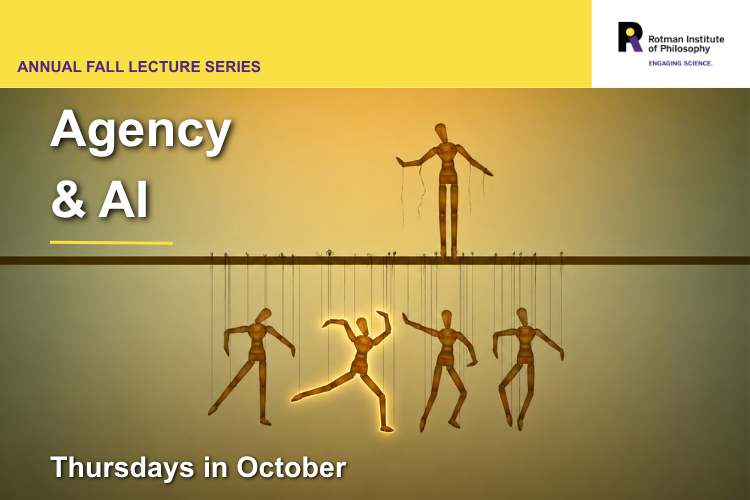
2026 Annual Fall Lectures: Agency & AI — Lecture Four
The Rotman Institute of Philosophy is pleased to present the 2026 Annual Fall Lecture Series:
"Agency & AI"
What does human agency mean in a world where AI systems are becoming increasingly integrated into everyday life? Where does human agency begin and end? What are the risks and impacts of treating AI as agents? Can AI systems be designed to support and strengthen human agency and capacity-building rather than replace or diminish them?
This year's series brings together leading scholars and thinkers to explore these and related questions from a range of perspectives. Join us each Thursday in October for five engaging lectures examining one of the most important philosophical issues of our time.
As part of the Rotman Institute's commitment to public philosophy, each lecture will be hosted at a different venue across London. These community-based events are designed to bring together scholars, industry professionals, students, community organizations, and members of the public for thoughtful conversations that connect philosophical inquiry with contemporary challenges and everyday life.

Speaker: Natalie Brender
Date: October 22nd
Time: 7:00 - 8:30 pm
Location: Innovation Works, Community Room, 201 King Street
Title: All in on AI for All? A Public Health Perspective on Digital Harms
Abstract: While public health embraces the potential of AI to analyze data in ways that can benefit Canadians’ health, it also recognizes that users may be harmed in engaging with general purpose AI on commercial platforms. However, understanding what those harms are, what causes them and how they are distributed across populations is very difficult. Equally challenging are prospects for using evidence to guide public policymaking in ways that might lead to regulation aimed at reducing those harms. In face of these realities, what prospects exist for exercising agency toward reducing the risks AI poses to health and well-being? This talk will consider prospects for three spheres of agency aimed at addressing digital harms. In the political sphere, there are potentials for researchers and citizens to shape the constitution and activities of the digital regulator proposed in the federal government’s Bill C-34. In the area of federal government administration, there are potentials to reshape how Big Tech is able to lobby and otherwise influence public service and elected officials. And in research circles it may be possible to consider new ways of producing credible and timely research capable of better informing policymaking aimed at reducing digital harms.