


Search Website
DW Winnicott's Theory of Culture and What It Can Do for Anthropology
FIMS & Nursing Building, Rm. 4110
Despite being more widely cited than Freud by clinical and academic psychologists, DW Winnicott was, until recently, rarely taken up by scholars within other disciplines. The past 20 years, however, have seen a turn towards Winnicott’s psychoanalytic concepts within political science and media studies. In this talk, I want to explore how Winnicott’s key concepts of the transitional object, transitional space, holding environment, and object use might open up new directions for cultural anthropology. I will take Winnicott not simply as a psychoanalytic theorist whose work can be applied to ethnographic material, but as a theorist of society and culture in his own right. I will read the work of two influential anthropologists, Marilyn Strathern and Eduardo Viveiros de Castro, through Winnicott, and show that Winnicott’s concept of cultural experience can help us resolve some of the critiques most often leveled at the “ontological turn” within anthropology – exoticism, ahistoricism, and depoliticization.
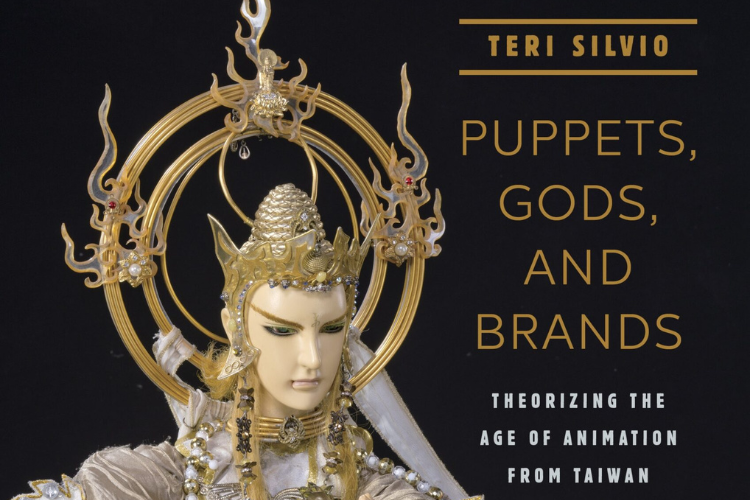
Biography: Teri Silvio is a senior Research Fellow at the Institute of Ethnology, Academia Sinica, in Taipei. She has done ethnographic research on Taiwanese opera and puppetry, animation, Boys Love media, fandoms, character design, and art markets. Her book, Puppets, Gods, and Brands: Theorizing the Age of Animation from Taiwan (University of Hawai`i Press 2019) develops an anthropological concept of animation as a complement to the concept of performance: if performance is the creation of social selves through embodiment and psychic introjection, animation is the creation of social others through the projection of agency into the material world. The book then looks at practices of animation across different fields within Taiwanese society: entertainment, folk religion, economic enterprise, and the construction of national identity. Dr. Silvio’s most recent research project is an ethnographic and historical study of the development of the art toy scene from a subculture in Hong Kong, Japan, and Taiwan to a global speculative market. The project focuses on how work and play, local aesthetics and global market logics, and class, gender, and national identities, are being constructed and combined in new ways through the production and consumption of toys.