


Search Website
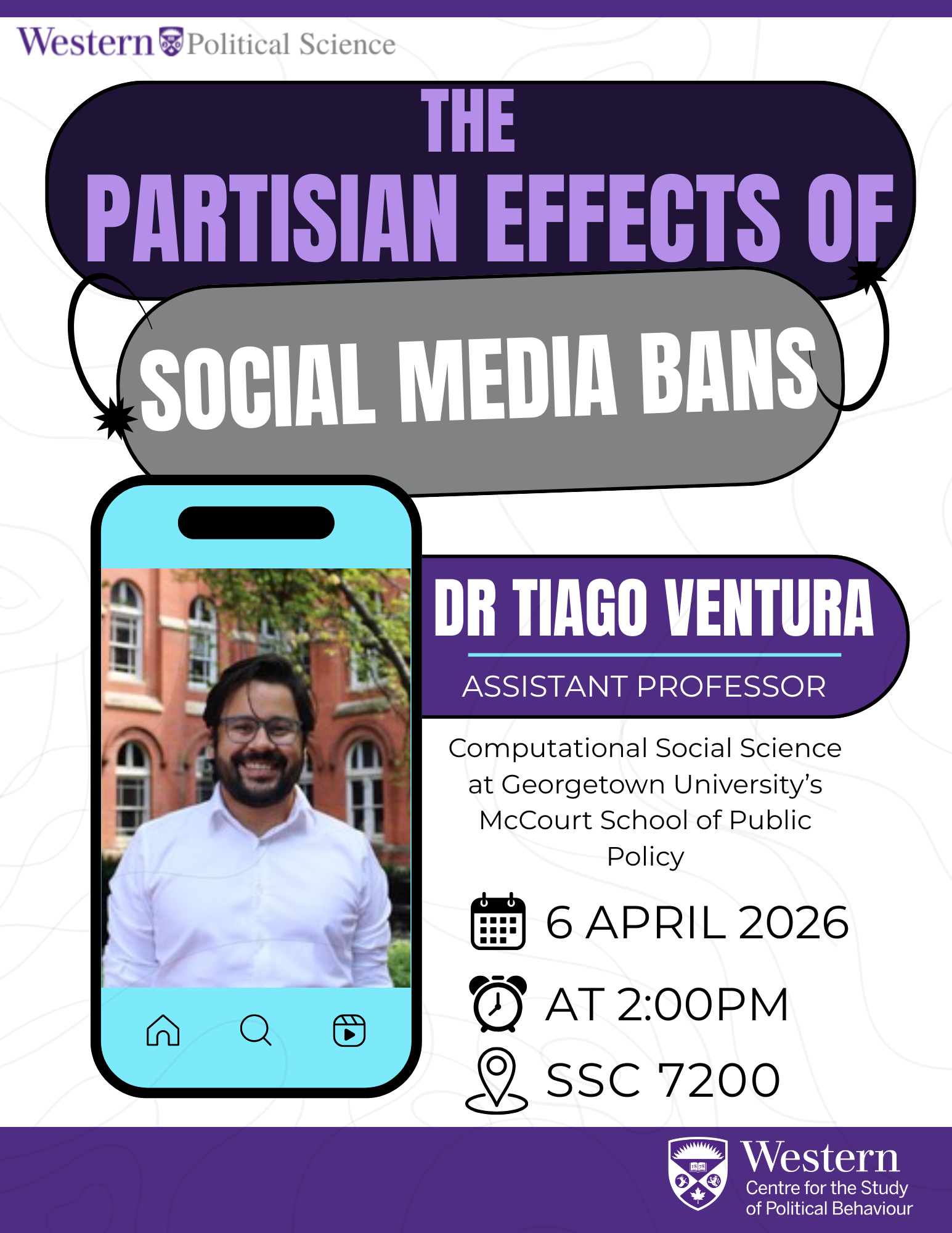
Dr. Tiago Ventura
Abstract: What happens to information environments when democracies ban social media platforms? A large body of work has investigated the consequences of censorship under authoritarianism. More recently, democratic contexts have witnessed the politicization of, and governmental intervention into, major online communication platforms. We study a notable example of this --- the 2024 national ban issued by the Brazilian authorities on the use of the “X” social media platform. We employ an event-study design to investigate the causal impact of the X ban in Brazil and how partisan identity drives responses to the ban. Using a large sample of politically engaged social media users alongside ideal-point analysis, we find strong partisan responses to the ban: conservative users not aligned with the government were significantly more likely to circumvent restrictions, and right-leaning news domains became considerably more prevalent on the platform. We call this a “sorting ratchet” -- in that it segmented the digital public sphere by partisanship and had lasting effects even months after the ban was lifted. In sum, we show that, in democratic contexts, platform bans may have unintended effects of deepening polarization and restructuring information environments in ways that may be difficult to reverse.