
Search Website
Major Modifications
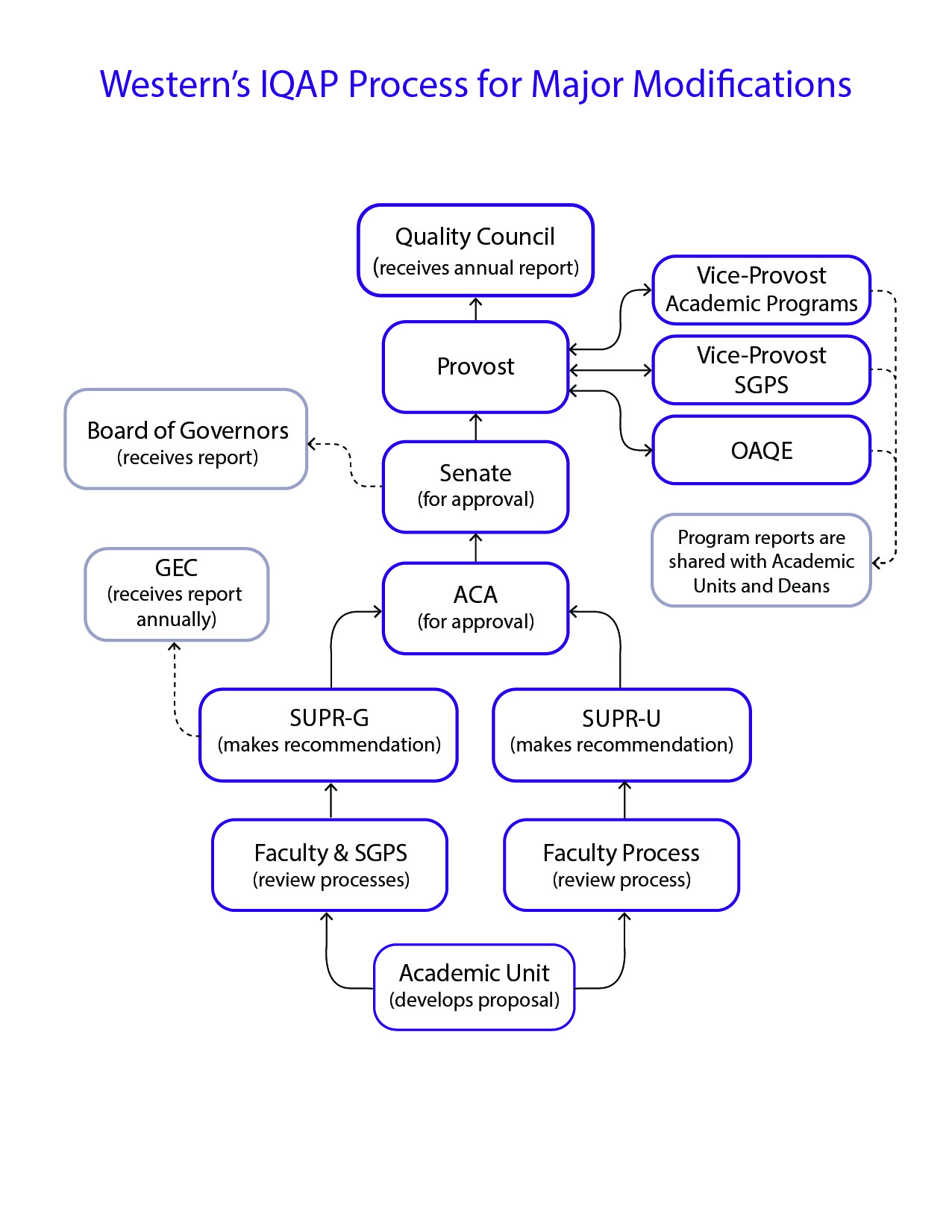
Continuous improvement is the ultimate goal of the ongoing and dynamic work of academic programs at Western as they create living documents that meet evolving standards and measures of quality in their programs. The quality assurance processes associated with major program modifications arising from program renewal and/or significant changes are designed to ensure that the educational experiences students have are engaging and rigorous, but also that the programs through which the experiences are provided are routinely monitored and, if necessary, revised. Typically, major modifications to a program are made to:
- implement the outcomes of a Cyclical Program Review;
- reflect the ongoing evolution of the discipline;
- accommodate new developments in a particular field;
- facilitate improvements in teaching and learning strategies;
- respond to the changing needs of students, society, and industry; and/or
- respond to improvements in technology.
Examples
A major modification is a significant change to an existing program. It may substantially alter the program’s requirements, learning outcomes, structure, or mode of delivery, while remaining within the scope of the approved program.
Examples include:
- adding or removing a thesis, practicum, internship, laboratory, or other significant program requirement;
- changing approximately one-third or more of the program’s courses;
- introducing or changing a graduate field or collaborative specialization;
- merging existing programs; or
- moving all or a significant portion of a program between in-person and online delivery.