

Search Website
Black Studies
Black Studies
Black Studies
Black Studies
Please also see GSWS course listings HERE.
2026-2027 Undergraduate Course Offerings
BLST1030G Introduction to Black Studies (In-Person)
An introduction to the interdisciplinary field of Black Studies that examines its foundations and debates, focusing on resilience and resistance in Black life. Students will examine practices used within this Black intellectual-activist tradition through various disciplinary approaches and by situating contemporary topics (identity, fashion, sexuality) within historical frameworks.
Antirequisite: The former GSWS 1030F/G.
Course outline for BLST1030G
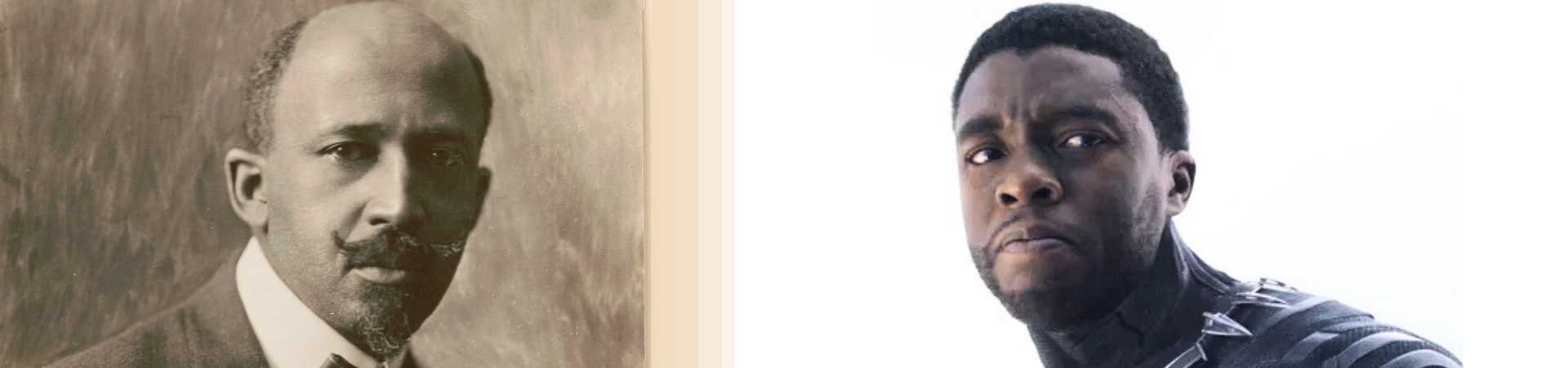
BLST2168B-650 From Du Bois to Black Panther: Black Popular Culture (Asynchronous Online)
Black popular culture is concerned with pleasure, enjoyment, and amusement and is expressed through aesthetic codes and genres. Drawing on literature, film, music, visual art, and television, this course examines examples of popular culture created by and for Black individuals to consider Black cultural values, beliefs, experiences, and social institutions.
Antirequisite(s): The former GSWS 2168A/B.
Pre-or Corequisite(s): Black Studies 1030F/G or the former GSWS 1030F/G; one of GSWS 1021F/G, GSWS 1022F/G, GSWS 1024F/G, the former GSWS 1023F/G, or any first-year essay course in Arts and Humanities, Social Science, or Media and Communication Studies.
Course outline for BLST2168B
BLST2230F The Black/African Diaspora (In-Person)
This interdisciplinary course is a historical and thematic examination of Black life across the diaspora. Students will examine the cultural practices of African communities’ pre-colonial contact as well as the ongoing impact of Atlantic enslavement on Black diasporic communities today. Specific content will vary year-to-year depending on the instructor.
Antirequisite(s): The former GSWS 2230F/G.
Pre-or Corequisite(s): Black Studies 1030F/G or the former GSWS 1030F/G; one of GSWS 1021F/G, GSWS 1022F/G, GSWS 1024F/G, the former GSWS 1023F/G, or any first-year essay course in Arts and Humanities, Social Science, or Media and Communication Studies.
Course outline for BLST2230F
BLST2410F Youth and Black Girlhood Between Crisis and Refusal (In-Person) (*currently on Draft my Schedule as BLST2460F, code will change in July)
This course explores Black girlhood as an entry point into key debates and methods in youth studies. By surveying representations of Black girlhood across academic literature and popular culture, students will learn how debates about race, age, gender, and class, shape frameworks for defining childhood, futurity, agency, and belonging.
Course outline for BLST2410F
GSWS3324G / ENG3204G Contemporary Topics in Critical Race Studies (In-Person)
Focusing on the changing meanings of race and racism in the twenty-first century, this course discusses and analyzes conceptual frameworks for understanding the multi-faceted and intersectional dimensions of race and racism, and examines how these inform social justice movements and other initiatives that seek to challenge institutional racism and racial violence.
Prerequisite(s): GSWS 2220E or Black Studies 2230F/G or the former GSWS 2230F/G or GSWS 2231F/G or GSWS 2302F/G, or the former GSWS 2273E, or permission of the Department.
Course outline for GSWS3324G
BLST3420F / ENG3891F Black Intellectual Traditions (In-Person)
This course examines intellectual movements that have been developed by Black peoples, who are ethnically diverse and call a variety of locations home. The course may consider the Black Atlantic Tradition, Black internationalism, Black Feminist Thought, African American Secularism, and/or Black Power. Content will vary year-to-year depending on the instructor.
Pre-or Corequisite(s): Black Studies 2230F/G or GSWS 2231F/G or the former GSWS 2230F/G or permission of the Department of Gender, Sexuality, and Women’s Studies.
Course outline for BLST3420F
Fall
Anthropology 2278A-650 Anthropology of Race, Ethnicity, and Identity (Asynchronous Online)
What are these categories of race, ethnicity and identity? These are hotly contested categories that are constantly shifting. This course will introduce students to anthropological conceptions of race and ethnicity and how these have shaped human identity over the 19th through 21st centuries. No prerequisites.
History 2630F – Africa: An Introduction (In-Person)
This course is designed to introduce the study of African history, from the deep past to the contemporary period. Students will leave with an appreciation of the African continent and its islands: the land, its peoples, and all creatures that call that continent home. No prerequisites.
Sociology 2190F – Decolonizing Canada (In-Person)
What does “decolonization” mean? What factors led to its emergence? What are the theoretical and practical challenges concerning its implementation? Working primarily from Indigenous perspectives, this survey course will introduce students to the dominant themes and debates guiding the current movement to “decolonize” Canada. No prerequisites.
Winter
Anthropology 3378G Bio-Cultural Debates in Race and Ethnicity (In-Person)
This course addresses anthropological approaches to race and ethnicity in historical and contemporary literatures from 19th-21st centuries, studying experiences of racialized groups such as African Diaspora, Uyghur, Latinx, and Indigenous peoples. We will look at anthropology's troubled legacy and the voices of emerging scholars who are forging new approaches. Prerequisite(s): Anthropology 2278F/G or permission of the instructor.
English 3471G Ballots and Bullets: US Literature and Civil Rights (In-Person)
This course considers literature that produced, reflected, and reacted to the emergence of the various American civil rights movements. Approaches will vary but likely topics include: the revolution and founding; “Indian Removal” and indigenous rights; slavery, abolition, and Jim Crow; women’s rights and feminism; the sexual revolution and queer identity. Prerequisite(s): At least 60% in 1.0 of English 1020-1999, or 1.0 of Film 1000-1999 plus English 2112F/G, Film 2212F/G, or Theatre Studies 2212F/G, or permission of the department.
History 3340G Reading Black Lives (In-Person)
This course examines the histories of people of African descent in the United States and Canada from the earliest days of the Trans-Atlantic slave trade to the present, through biographies and autobiographies. It explores such themes as agency, resistance, intersectionality, identity, freedom, and creativity. No prerequisites.
History 4645G Resistance to Apartheid in South African and Global History (In-Person)
In this course, we will read, research, and write about structural and quotidian racism in colonial Southern Africa in the 20th century. Concomitantly, we will study the resistance movements and their leadership skills in antiracist work locally and globally. Herein is potential to change lives and futures. Prerequisite(s): Registration in third year or above, any module.
Political Science 2533G Racialized Injustice in Canada (In-Person)
This course explores ‘race’ as a stigmatizing force in Canadian politics and how laws and policies are constructed on the bedrock of whiteness. It examines how the racialization of Indigenous peoples, ethnoracialized groups and ethnoreligious minorities shapes contemporary controversies in the realms of law, public policy, policing and criminal justice. Prerequisite(s): Political Science 1020E or permission of the instructor.
Sociology 2107B Race, Ethnicity, Nation (In-Person)
This course will examine ethnicity, nationalism, and race in contemporary societies, and how they can help understand social dynamics, policies, and trends. The focus will be primarily on Canada, with comparisons made to other societies and transnational processes. No prerequisites.
Sociology 4420G Social Context of Racial Inequality (In-Person)
What are the sociological origins of racial inequality? We begin by investigating how sociologists understand racial and ethnic distinctions. We then shift our attention to patterns of racial inequality in the context of major social institutions: housing, the labor market, schools, and prisons. Prerequisite(s): Registration in third year or above in any Department of Sociology module, or fourth year in any module.
Sociology 4472G Health Inequalities: The Social Determinants of Health (In-Person)
There are marked inequalities in health by socioeconomic class, race/ethnicity, and immigration experiences. The goal of this course is to understand the patterns of inequality, identify the determinants and consequences of health inequality, and envision policy interventions that can diminish health inequalities across the above-mentioned subpopulations. Prerequisite(s): Registration in third year or above in any Department of Sociology module, or fourth year in any module.