
Search Website
The Mathematics of Neural Networks
How do we harness the strength of mathematics to create novel ways to understand human and machine learning?
The Mathematics of Neural Networks
How do we harness the strength of mathematics to create novel ways to understand human and machine learning?
The Mathematics of Neural Networks
How do we harness the strength of mathematics to create novel ways to understand human and machine learning?
“The collaborative environment fostered by the Western Academy has been key to our success, providing a fertile ground for ideas to flourish and collaborations to thrive. We look forward to building on this partnership, pushing the boundaries of knowledge in neural network theory, and contributing to the advancement of both artificial intelligence and neuroscience.”
-Lyle Muller & Ján Mináč
Unraveling the Mysteries of the Human Brain
New technologies are transforming our ability to map neural systems. For decades, researchers could study only a handful of cells in a living neural circuit. Now, synaptic reconstructions and large-scale spike recordings can map the structure and activity of thousands of cells during sensory perception and sleep, showing how their collective activity drives sensory and cognitive computation. These large, complex datasets require new and rigorous mathematical approaches.
Challenge
Deep learning or artificial intelligence (AI) has the potential to unravel the mysteries of the human brain. New mathematical ways to understand how AI neuronal networks function will help us explain brain activity in health and disease.
Impacts
- Explainable AI developed, allowing us to observe artificial neural networks in action
- Comprehensive understanding of memory in biological neural networks established, opening pathways for new disease interventions
- New AI-guided method developed to stop epileptic seizures
- World-leading stem cell research accelerated to bridge the knowledge gap between virtual (AI) and real (neural cell) memory systems
Team Members
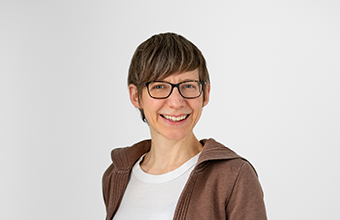
Frederic Chavane
Maria Chudnovsky
Alex Lubotzky
Christian Maire
Give to WAFAR
Become a part of a community striving to improve our world.