
Ongoing Projects
The WINGS Study

Exploring the resilience and mental well-being needs of international undergraduate students in Ontario – funded by the Western Strategic Support for SSHRC Success
While studying abroad has advantages, international undergraduate students face unique challenges (e.g., high tuition fees, labour shortages, ongoing changes to immigration policies, discrimination) which can impact their resilience and mental well-being. Researchers have reported that the varying levels of resilience and mental well-being among undergraduates are influenced by multiple factors (e.g., individual, social, and cultural). Resilience helps undergraduate students bounce back from a multitude of challenges at each systemic level, although the examination of resilience and mental well-being specific to international undergraduate students represents a current gap in the literature. Theoretically informed by the Social-Ecological Framework of Resilience (Ungar et al., 2013), the needs experienced by international students are crucial to explore and consider in the quest to promote their resilience and well-being. Therefore, the purpose of this study is to conduct a needs assessment to determine the (1) self-identified needs of international undergraduate university students in Ontario pertaining to their resilience and mental well-being; and (2) tools they perceive would enable them to feel supported in these areas.
The Orchids at the Gym Study

The Orchids at the Gym Study is a survey project investigating the personality trait of environmental sensitivity and its links to preferred physical activity environments and self-efficacy in Ontario undergraduate students.
The Mindful Grads Study
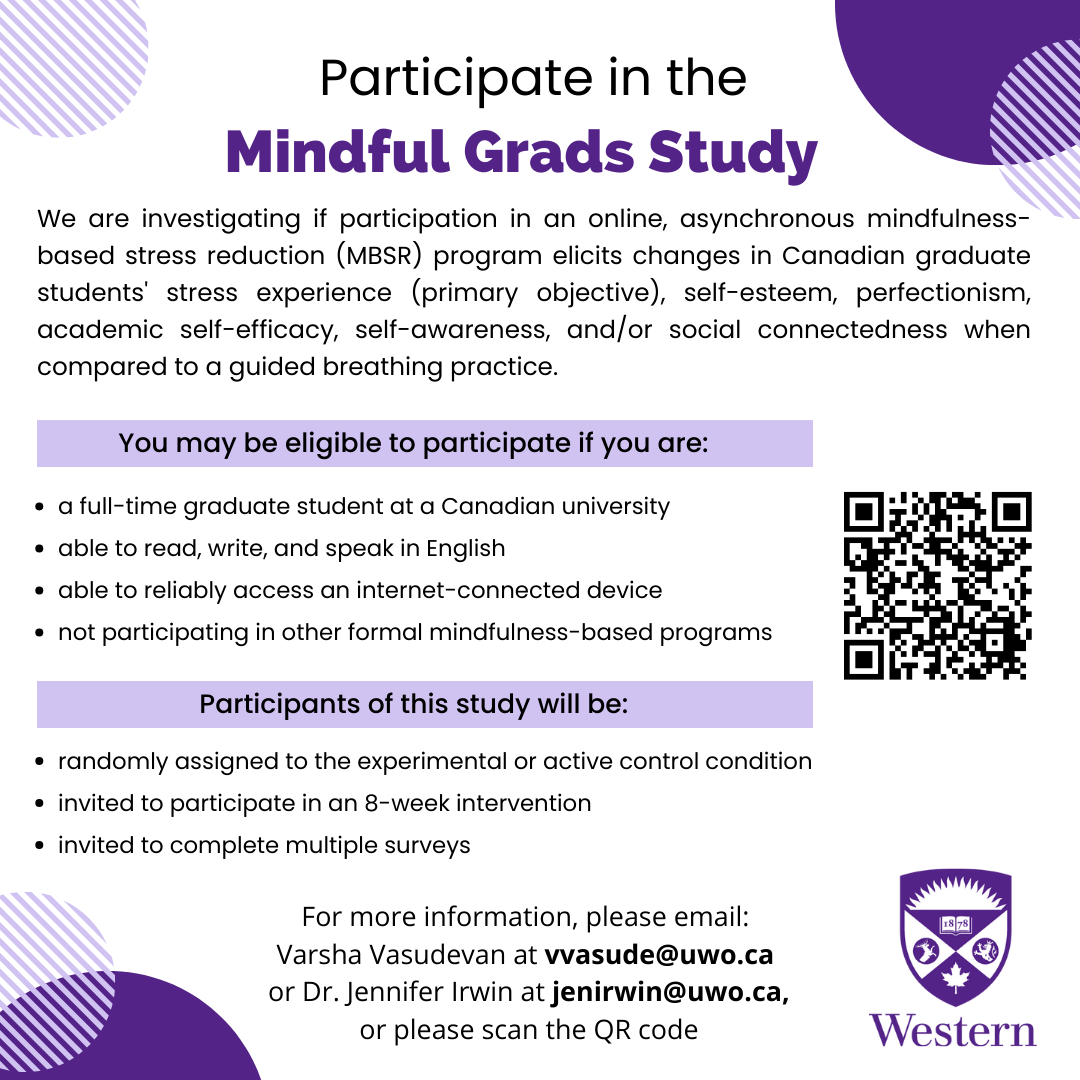
Can an evidence-based mindfulness program help Canadian graduate students build their capacity for stress-management, self-esteem, perfectionism, academic self-efficacy, self-awareness, and social connectedness?
The purpose of this study is to investigate if participation in an online, asynchronous mindfulness-based program elicits changes in Canadian graduate students' stress experience (primary), self-esteem, perfectionism, academic self-efficacy, self-awareness, and/or social connectedness when compared to an active control that models the mindfulness-based program delivery but uses breathing exercises only. A single-blind randomized parallel-group superiority trial will be conducted to achieve the study objectives. Baseline measurements will occur immediately prior to randomization and follow-up measures will occur following intervention completion (i.e., at 9 weeks), and 1-month later (13 weeks). The following previously validated scales will be applied at each time point to assess the research outcomes of stress, self-esteem, perfectionism, academic self-efficacy, self-awareness, and social connectedness: Perceived Stress Scale (Cohen, 1998); Rosenberg Self-Esteem Scale (Rosenberg, 1965); College Academic Perfectionism Scale (Liu & Berzenski, 2022); The Academic Self-Efficacy Scale (Zajacova et al., 2005); The Situational Self-Awareness Scale (Govern & Marsch, 2001); and The Social Connectedness Scale--Revised (Lee et al., 2001).
To learn more about this study and to get involved, please click on the following link to be directed to the study’s letter of information: https://uwo.eu.qualtrics.com/jfe/form/SV_4Gxi2UTknAevE6q
The Students’ Adherence to Federal COVID-19 Prevention Strategies at Universities in Canada: The SAFE-U Study
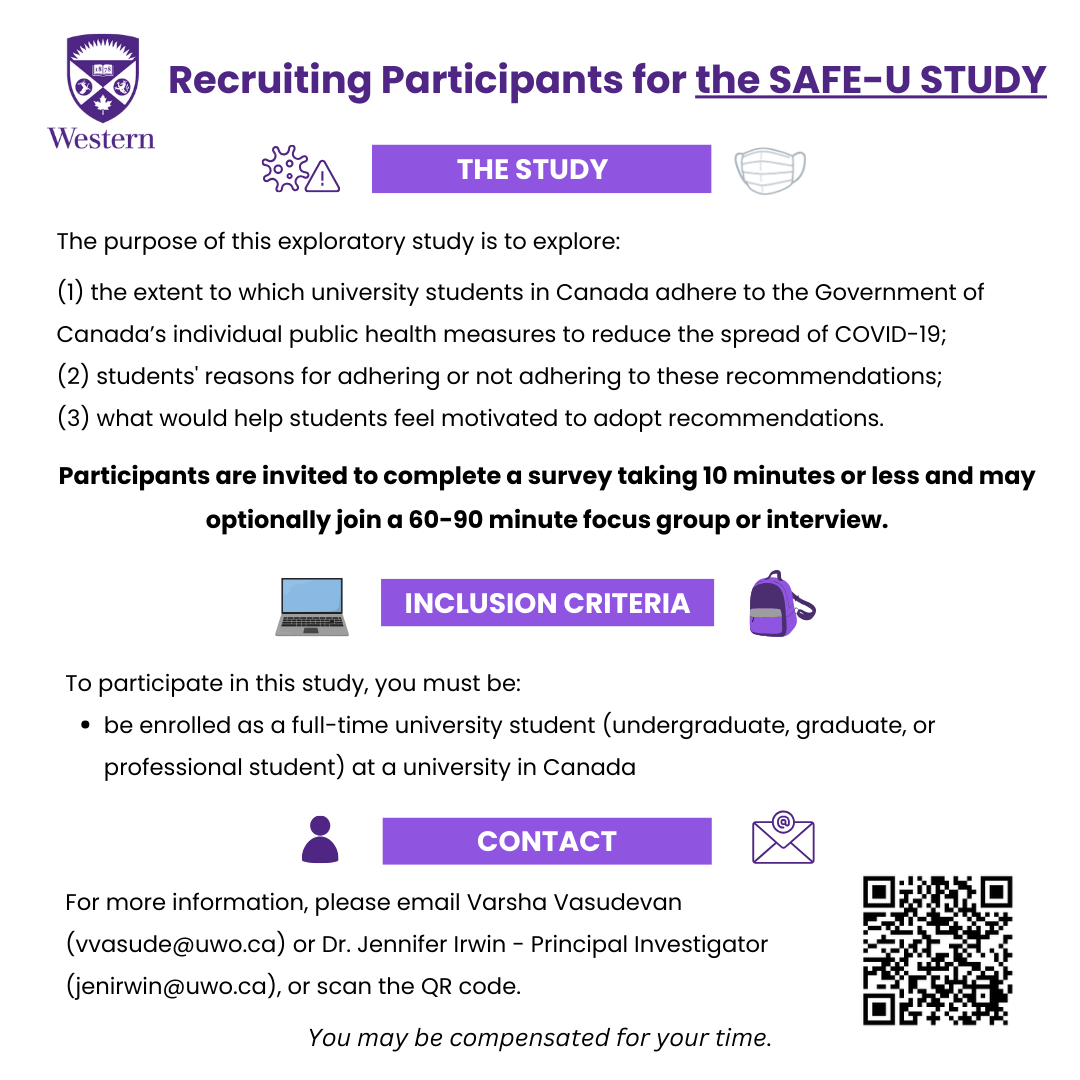
With the SAFE-U study, we are exploring: (1) the extent to which university students in Canada adhere to the Government of Canada’s (2024) individual public health measures to reduce the spread of COVID-19; (2) students' reasons for adhering or not adhering to these recommendations; (3) and what would help students feel motivated to adopt recommendations.
The Mindful Matters Study: What do graduate students want from a mindfulness-based intervention?
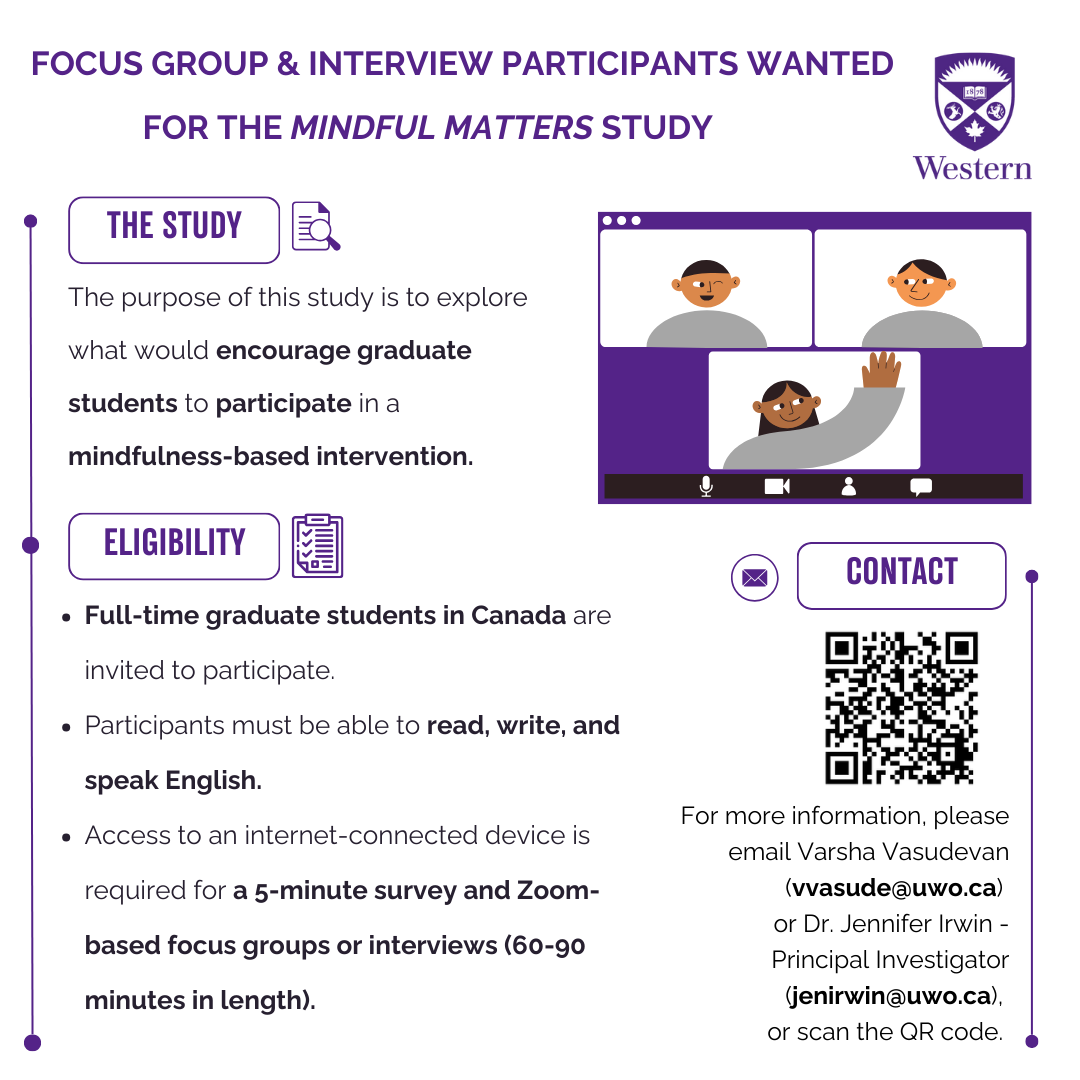
The Mindful Matters study consists of focus groups and interviews to explore what would encourage graduate students to participate in a mindfulness-based intervention and what such an intervention could look like.
Supporting the Resilience and Mental Well-Being Needs of International Students: A Pilot Study
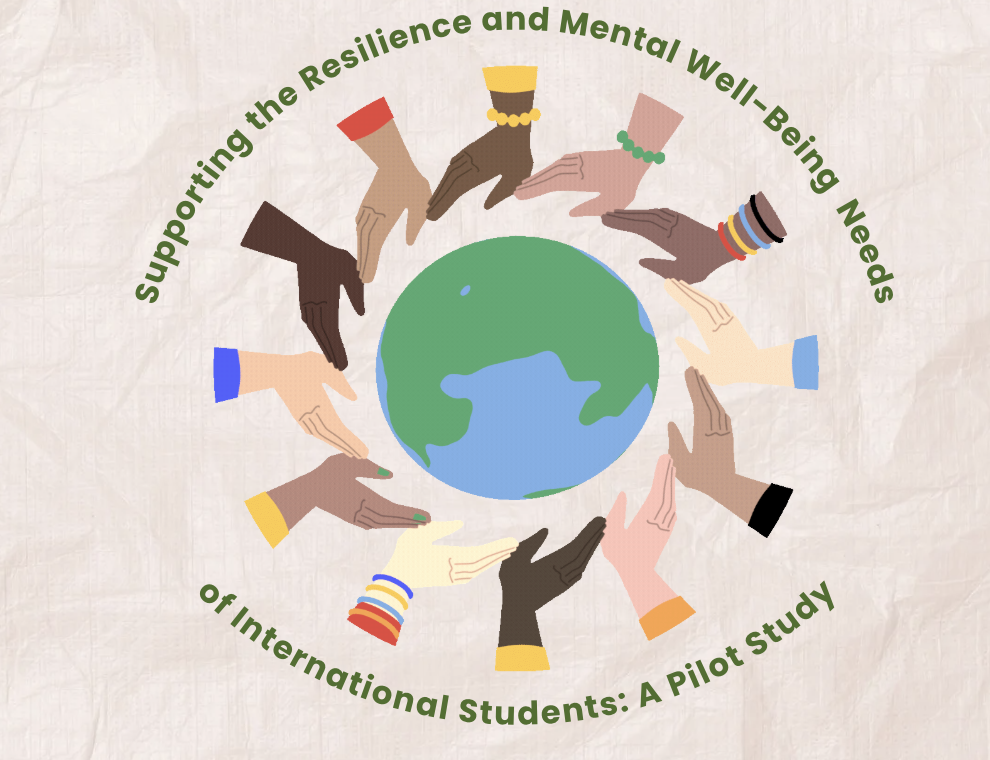
This is a mixed-methods study assessing the formative impact of a pilot mentorship program offered by Western International on undergraduate international students’ resilience and mental well-being.