
About
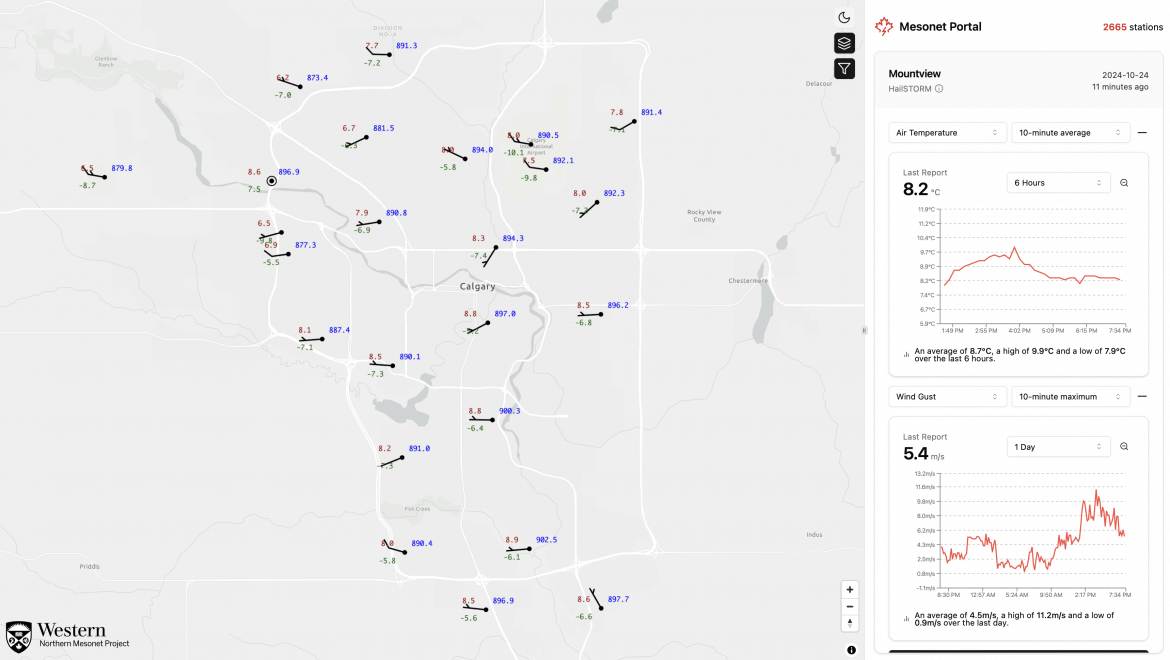
"Mesonet" is a portmanteau of the words "mesoscale" and "network".
In meteorology, "mesoscale" refers to weather events that range in size from about one kilometer to approximately 250 kilometers. Mesoscale events include thunderstorms, tornadoes, downbursts, and hailstorms; which can last from several minutes to several hours. Therefore, densely spaced weather observations are required to ensure that mesoscale weather events do not go undetected.
The Northern Mesonet Project (NMP), founded at Western University in 2024 with the support of social impact fund ImpactWX, aims to better monitor severe convective storms, improve severe and extreme weather understanding and prediction, mitigate against harm to people and property, and investigate future implications due to climate change.
As climate patterns continue to evolve, the ability to observe and measure weather has become a critical necessity. This is particularly true of weather due to severe convective storms (SCS), which can include damaging hailstones, tornadoes, downbursts and flash floods. SCS may also produce extreme weather – weather that is climatologically rare in intensity, location or time of year. Documenting and analyzing such events offers invaluable insights into their causes, impacts, and potential future occurrences. No single instrument captures a storm in full. Weather radar detects precipitation and wind patterns aloft, but it cannot measure conditions at the surface, where storms do their damage to people and property. Surface weather stations record that ground-level data directly, which is what makes them essential to understanding SCS. Existing surface weather stations in Canada often have several known limitations that hinder their usefulness, particularly regarding highly localized SCS. The largest limitation is that they are owned by many different federal and provincial agencies, with limited ocmmunciations between smalelr networks.
To combat this, the goals of the Northern Mesonet Project are:
- To increase observation density across Canada by creating CSSL Weather Intelligence, a central access point that unites existing networks (a network of networks) for the real-time collection and dissemination of publicly available weather observations; bringing all surface weather stations, radar, satellite, and lightning together in a single view.
- To supplement existing surface weather stations with specialized high-density networks (STORM) for the dual purpose of evaluating new techniques and technologies and capturing SCS-driven weather events by using a high temporal resolution in underserviced areas prone to SCS.
Project Leadership
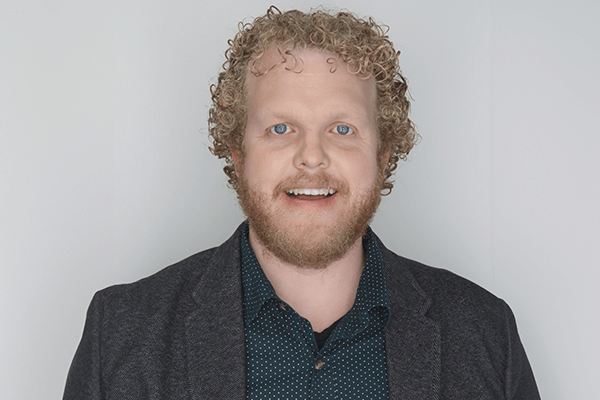
Connell Miller
Dr. Connell Miller is the Director of the Northern Mesonet Project, and an adjunct professor in Western University’s Department of Civil and Environmental Engineering. He received a BESc in Civil Engineering from Western University in 2015, and a PhD in Civil Engineering from Western University in 2020. He is also the coordinator for the summer undergraduate internship program for the Canadian Severe Storms Lab. His expertise is in the field of remote sensing, unmanned aerial vehicles (UAVs), instrumentation, and full-scale experiments.
Dr. Miller's current research is focused on alternative methods of estimating wind speeds in tornadoes such as the simulation of debris trajectories of vehicles; as well as alternative methods for detecting tornadoes through remote sensing tools such as vegetation indices and synthetic aperture radar.
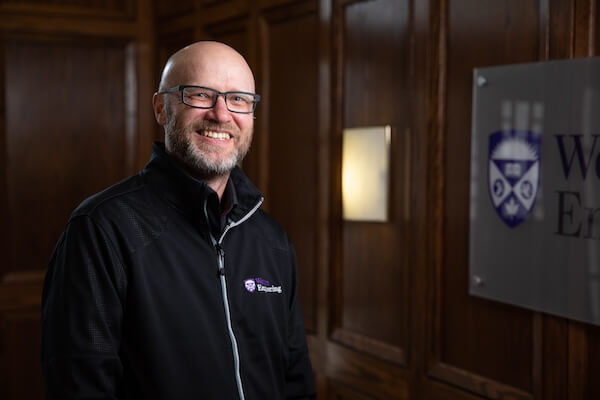
Greg Kopp
Dr. Greg Kopp is the ImpactWX Chair in Severe Storms Engineering, lead researcher in the Northern Mesonet Project, and a professor in Western University’s Department of Civil and Environmental Engineering. He received a BSc in Mechanical Engineering from the University of Manitoba in 1989, a MEng from McMaster University in 1991 and a PhD in Mechanical Engineering from the University of Toronto in 1995. His expertise and research relate to mitigating damage to structures during extreme wind storms such as tornadoes and hurricanes.
He works actively to implement research findings into practice, currently serving as Chair of the ASCE 49 Standards Committee on Wind Tunnel Testing For Buildings and other Structures, and as a member of various other Building Code committees. A former Canada Research Chair in Wind Engineering, he is also the lead researcher for the Three Little Pigs Project at The Insurance Research Lab for Better Homes.
Project Partner and Founding Supporter
 ImpactWX
NMP was founded in 2024 with support from the Toronto-based social impact fund ImpactWX. ImpactWX's mission is "to enable organizations who, through scientific understanding and public awareness, work to improve people's response and safety during severe weather events." This includes the integration of research and practice - for meteorology, engineering and human behavioral science in the NTP context. The support and partnership of ImpactWX has allowed scientific exploration that would otherwise not have been possible.
Project Staff & Students
 Christopher Howlett
Dr. Christopher Howlett (BESc [Distinction] '16, PhD '26, Civil and Environmental Engineering, Western University) is a full-time research software engineer with the NMP. His research background involved leveraging computational fluid dynamics and specialized AI to optimize tall building aerodynamics. Throughout his career, he has worked on the development of complex data-driven design workflows, and he continues to apply those same computational strengths to synthesize multi-source data, helping Canadians better understand severe storm patterns. Chris is passionate about open-source development and believes in the power of transparent, accessible data to foster collective learning.
 Liz Sutherland
Liz Sutherland (BSc [Distinction] ’16, Geographic Information Science, Western University; MLIS ’23, Library and Information Science, Western University) is the GIS Research Scientist for NMP. In her role with the Canadian Severe Storms Laboratory, Liz provides GIS research leadership across CSSL projects, leading the development of geospatial workflows, data infrastructure, and tools for severe-storms research. She is particularly interested in applying GIS and geospatial technologies to advance research, improve data integration and visualization, and support the dissemination of research outputs.
 Anij Sparenberg
Anij Sparenberg (BA [Hons] ’25, Geography and Environment, Western University) is a Master of Engineering Science (MESc) student in Civil and Environmental Engineering. Her research focuses on the application of LiDAR technology in analyzing damage from severe wind events. Her work explores how LiDAR can improve the automation, precision, and level of detail captured during post-storm damage surveys—capabilities that are increasingly important as storm frequency and intensity rise. In addition to her research, she contributes to NTP’s rapid-response team, conducting drone and ground-based surveys to accurately assess, rate, and document storm damage.
 Hailey Durham
Hailey Durham (B.Eng [Distinction] ’25, Civil Engineering Co-op, McMaster University; MESc student, Civil and Environmental Engineering, Western University) is a master’s students with the CSSL. Her research focuses on refining and enhancing the damage indicators for barns within the EF scale by developing a more detailed structural classification system and conducting targeted structural analyses to better represent their performance under wind loading. Taking advantage of both field and office work, she will be using ground and drone surveys and model simulations. She is a part of the rapid-response ground survey team, especially if barns are involved.
CSSL Weather lntelligence Developers
Thank you to the software engineering and computer science undergraduate students from universities across Canada who were responsible for the creation, and continue to be responsible for the maintenance of CSSL Weather Intelligence. Their names are listed below to provide proper attribution to them: