
Social Science
In 2025, social science at CSSL was formally launched as part of the organization’s summer intern program. Social science research at CSSL supports the organization’s mission to understand human impacts related to severe convective storms in Canada. Social science field investigations at CSSL function as a complement to the engineering and meteorological investigations carried out by the organization, and contribute to a holistic understanding of severe weather and its impacts across Canada. This interdisciplinary approach is necessary for developing innovative techniques and tools that have the potential for addressing underlying vulnerabilities and improving the safety and well-being of Canadians, which is in keeping with CSSL vision.
What is Social Science?
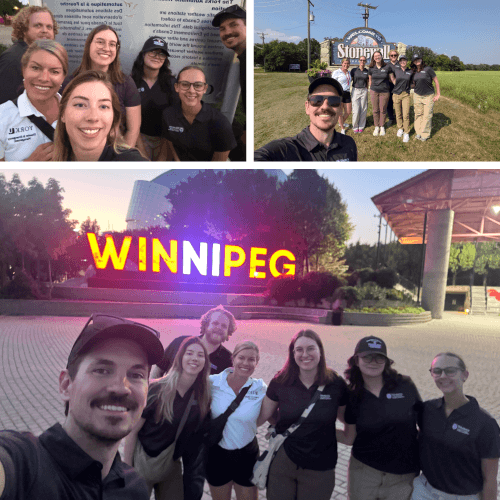
Social science is the study of people as individuals, communities and societies; their behaviours and interactions with each other and with their built, technological and natural environments. At CSSL, social science principles are applied to the severe weather context. Informed by the social science discipline of anthropology, and utilizing methods such as observation and semi-structured interviewing, social science investigations at CSSL focus on highly impactful events and ask residents to share their Severe Storm Story by answering the following questions, generally:
- How did you learn about the potential for severe wind, hail or flood exposure?
- How did you perceive risk towards the possibility of severe wind, hail or flooding?
- How did you respond to the severe wind, hail or flooding that was approaching or occurring?
- How were you impacted by, and how did you manage impacts from, severe wind, hail or floods?
Responses to these questions uncover how residents impacted by severe weather interact with their environment. Each Severe Storm Story shared is documented on a dashboard and the collection of Severe Storm Stories for chosen events are compiled and analyzed to generate events-based story maps.
Severe Storm Stories:
On May 19, 2026, a tornado tracked through areas of southern London, damaging power poles, trees, homes, farm buildings and a transport truck. An NTP survey rated the tornado EF1, with estimated maximum winds of 145 km/h, a 26.2 km track length and a maximum path width of 600 m.
MoreOn May 19, 2026, a downburst caused damage to power poles, trees, homes and an apartment building in east London. An NTP survey rated the downburst EF1, with estimated maximum winds of 145 km/h, intermittent damage extending approximately 9.9 km in length and up to 1.1 km in width.
MoreOn June 11, 2026, widespread flooding occurred after more than 250 mm of rain fell across the region. The flooding inundated homes, roads, yards and agricultural areas, overwhelmed drainage systems and caused extensive property damage and prolonged cleanup efforts.
MoreOn June 29, 2026, a tornado tracked through southwestern Winnipeg, causing damage to homes, businesses and trees. An NTP survey rated the tornado EF1, with estimated maximum winds of 155 km/h, a 6.45 km track length and a maximum path width of 200 m.
More