



Laser Raman Spectroscopy
What is Raman Spectroscopy?
- Raman spectroscopy depends on a change in the induced dipole moment or polarization to produce Raman scattering.
- When a beam of photons strikes a molecule the photons are scattered elastically (Rayleigh scattering) and inelastically (Raman scattering), generating Stoke's and anti-Stokes lines.

Advantages of Raman Spectroscopy
- Because Raman spectroscopy is a scattering process, samples of any size or shape can be examined.
- Very small amounts of material can be studied down to microscopic levels - 10 microns.
- Fiber optics can be used for remote sensing.
- Aqueous samples can be studied.
- The region from 80-500 cm-1 can be studied with no changes on the same instrument.
Our System
- Two laser wavelengths available: 633nm and 514nm
- Microscope with Macro Point Accessory Kit, allowing analysis of powders, liquids, films, etc.
- Global Raman Imaging: allows one to quickly image different moieties on a catalyst surface (changes in oxidation state, crystal form, etc.)
- Raman Mapping Stage: allows one to map discrete areas on a flat surface, collecting whole spectra from each area and deriving 3D maps from the data.
- Line Focus Accessory: allows one to defocus the Laser beam to cover a discrete line on the surface of the sample and collect maps.
- Fibre Optic Attachment: with approximately 20 meters of cable, allows us the flexibility to attach the Raman spectrometer to other instruments such as the Imaging XPS.

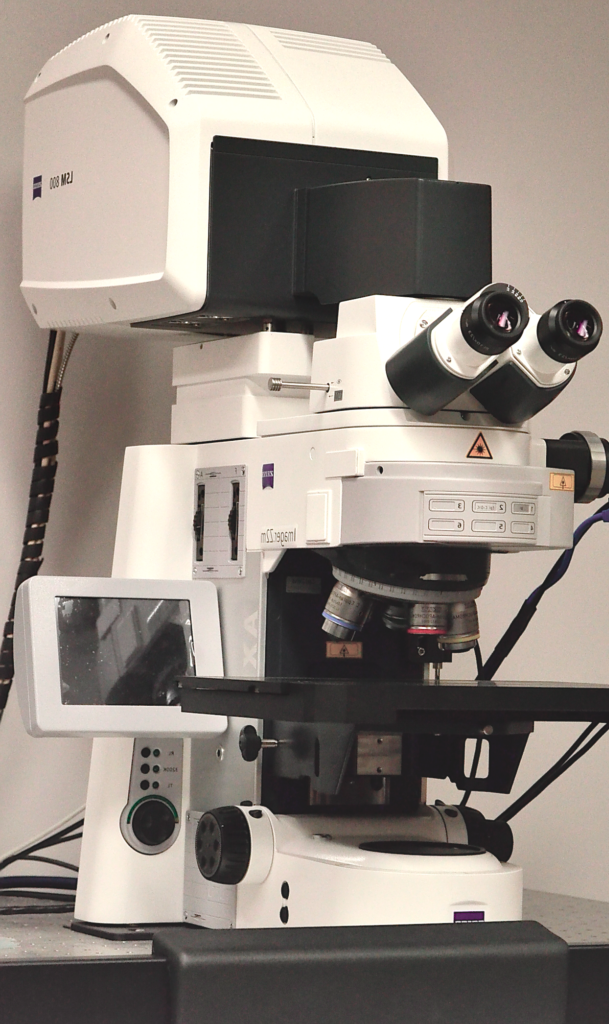
Renishaw Model 2000 Raman Spectrometer
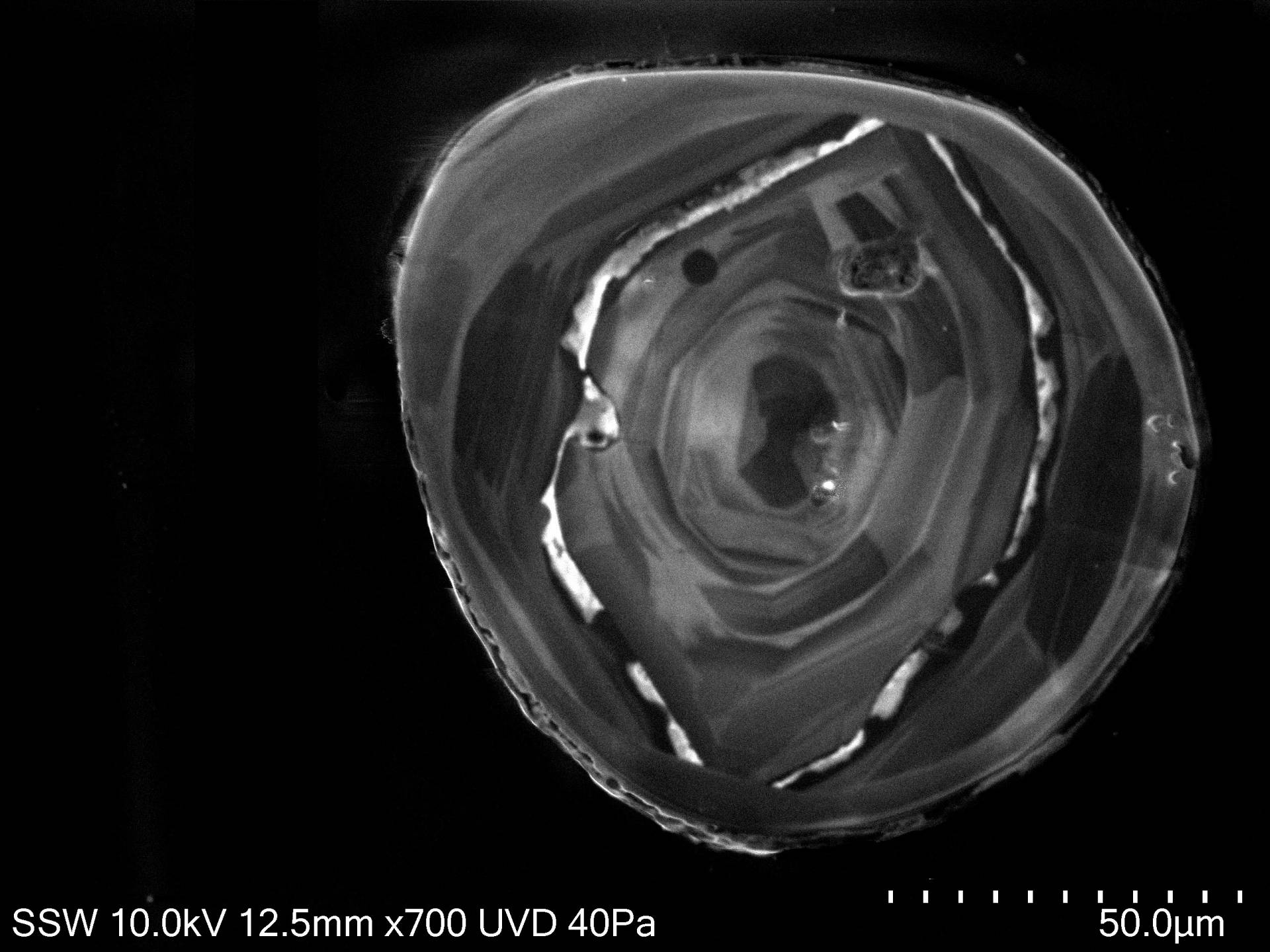
Examples of Laser Raman Spectroscopy
Contact
.:Ross Davidson
Manager, Scientific Operations
Call: (519) 661-2173
Fax: (519) 661-3709
E-Mail us
Customer Testimonials
"The quality, speed and accuracy is amazing"
"Great job! I will be doing more business with you."
more about our customers...